

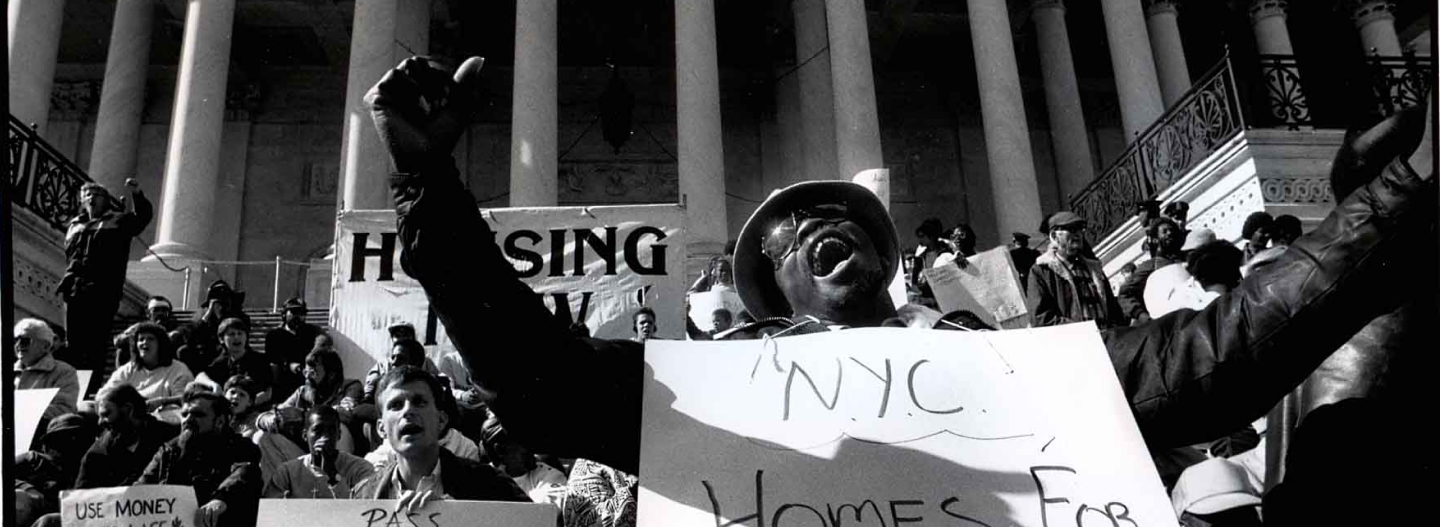
Poor People’s Army March on the Democratic and Republican Conventions

Over the past 23 years, the National Coalition for the Homeless (NCH) has documented nearly 2000 incidents of violence against people who were homeless. Since 1999, at least 588 of unhoused victims have violently been killed just for being unhoused.
These crimes appear to have been motivated by a perpetrator’s bias against people experiencing homelessness, and to have been facilitated by a perpetrator’s ability to target homeless people with relative ease. The crimes are a litany of atrocities: beatings, rapes, mutilations, and murders. The murder victims died in unfathomable ways: not only shot or stabbed to death, but also set on fire, drowned – even beheaded.
This year, we’ve documented shocking levels of law enforcement involvement in attacks against people experiencing homelessness, as well as serial attacks on people experiencing homelessness. Most notably, Oregon saw a whopping 500% increase since the last reported attacks in 2019.
In several states, such as Kentucky, Florida, Missouri, and others, legislation has been enacted that exacerbates the already dire situation faced by those experiencing homelessness. These laws create a vicious cycle of punitive measures that further marginalize and dehumanize people who are already in vulnerable circumstances.
Unfortunately, these injustices have fueled vigilantism and hatred directed towards people who are forced to live outdoors. It is imperative that society recognizes that homelessness is a societal issue and should not be met with violence or unwarranted hostility.


City and county level ordinances also contribute to a perfect storm of dehumanization of people experiencing homelessness that leads to violence. The small town of Grants Pass, Oregon, is one of hundreds of cities nationwide that has passed law banning sleeping outdoors. The Grants Pass ordinance was challenged in court, as there is not enough shelter available in town for everyone who needs it, and the city appealed. On April 22, 2024, the U.S. Supreme Court heard oral arguments in the case, and over 700 advocates gathered on the steps of the court to rally in support of Housing, not Handcuffs for people forced to live outdoors. The decision reached in this case has far-reaching implications for the treatment of individuals who have been displaced from their homes.
The quiet town of Grants Pass was surprised in March of 2022, when an unknown assailant set the tent of someone forced to live outdoors on fire. Unfortunately, we should not be surprised.
While NCH has compelling data on the number and severity of attacks in general, many of these acts remain underreported (in part because people experiencing homelessness tend to live on the outskirts of communities). The Bureau of Justice Statistics found that in 2019 “less than half (44%) of violent victimizations (of people experiencing homelessness) are reported to police.” Furthermore, many attacks were likely even more gruesome than available reports imply.
The National Coalition for the Homeless calls upon all stakeholders, including lawmakers, law enforcement agencies, advocacy groups, and community members, to view consider protecting our unhoused neighbors as a vulnerable population. Further, we urge policymakers to invest in the housing and community supports we all need, and that are proven to end homelessness.
Report (without appendices)
Appendix A: Hate Crimes vs. Vulnerable Victims Status
Appendix B: Protected Class Resolution
Appendix C: Hate Crimes Legislation Resource Guide
Appendix D: Case Research and Citations
Read the full report: https://nationalhomeless.org/wp-content/uploads/2024-Hate-Crimes-Report_for-web.pdf

Whoops!
No order information is available because no purchase was made.
Purchase Tickets
Checkout Error!
Something went wrong!
Oops, no tickets!
Please browse events and add tickets to check out.
The rally at the Supreme Court impacted me in several ways. I was not unmoved by the underlying reason for being on the steps of the highest court in the nation: protesting the upholding of the right for people to sleep under a blanket if they didn’t have an alternative.
We were fighting extreme bias in a place that has had the most fatal attacks against people experiencing homelessness. Lawyers and elected officials were forcefully attempting to make the case that parks and the appearance of a community were more valuable than the lives of vulnerable and marginalized human beings. In a nation fractured by politics and individualism, there persists a misguided belief that fines, handcuffs, and imprisonment serve as deterrents to homelessness. Yet, tragically, the reality speaks to the improbability of such a notion.
There were many things so I will move on to the numerous positive takeaways. For the first time in several years, there was this collaboration of advocates who worked on behalf of the unhoused population, those who were once in the population, and those currently working together to speak truth to power. It wasn’t perfect, of course. We are still making the same mistakes pointed out by Ron Casanova in his book “Each One Teach One.” We must always make space for people living the experience, not just those with lived experience. I take this critique personally because I had the opportunity to choose speakers. Although I didn’t make this decision alone, it was a mistake not to lift the voices of those struggling.


The rally on April 24th brought back a sense of nostalgia for me. The day brought back memories of buddy gray and the people of the Over-the-Rhine beloved community fighting to preserve a neighborhood surrounded by speculators, profiteers, and financial predators. Some people deeply rooted in the late 80s and 90s fights were there: Barb Poppe, Fred Karnas, and Bev Merrill were in the crowd. They know the power of organizing well and its effectiveness when we have had significant victories when we have organized and engaged in direct action.
Our advocacy during that time brought us victory and stinging defeat. We won the Cranston Gonzalez Act, The McKinney Vento Act, and the Education for Homeless Children and Youth Act. The losses are also numerous; Over-the-Rhine is no longer a beloved community if you are a gentrifier or partygoer. Every day, we lose a criminalization fight. City after city resorts to hiding people who experienced homelessness in jails and institutions versus helping them into housing.
Many longtime residents are long gone, moved to parts unknown, and replaced by fancy eateries and trendy nightclubs. The residents of Over-the-Rhine stopped protesting after the death of our leader, Buddy Gray. The community lost its will on that day. This pattern often happens when movements lose their charismatic leaders, from Dr. King and the civil rights movement to the loss of Mitch Snyder in the homeless movement. The beauty of this movement is that millions of leaders with lived experience can ensure that the Grants Pass demonstration is not a one-off; instead, it can be a harbinger of a new era of resistance. An organized Bring America Home Now Movement!
Written by NCH Executive Director, Donald Whitehead ; Edited by Kenia Mazariegos, Assistant Director of Communications

For too long, our brothers and sisters without homes have faced legal and societal barriers that criminalize their existence. Sleeping, eating, and performing other necessary life activities in public spaces—their last resort—are met with penalties rather than support. Johnson v. Grants Pass brings these injustices to the forefront, challenging us all to reconsider how we treat the most vulnerable among us.
This landmark case centers on the rights of homeless individuals in Grants Pass, Oregon, challenging ordinances that penalize life-sustaining activities in public spaces. At its heart, Johnson v. Grants Pass isn’t just about one town; it’s a reflection of the broader struggle for dignity, respect, and the right to exist in public spaces without fear of harassment or punishment.
To learn about Johnson V Grants Pass, visit the official website

City of Grants Pass v. Johnson
Did you know that the Supreme Court is considering whether not having a home is a crime?
The case is simple: can cities that fail to meet everybody’s basic needs of housing or shelter punish people with no choice but to sleep outside for using things like blankets or pillows?
Johnson v Grants Pass started in Grants Pass, Oregon, when the city began issuing tickets for people sleeping on public property, even when there were no safe, welcoming shelter beds available.
Grants Pass is like many cities in America, it has no welcoming shelter beds and is also thousands of housing units short of what is needed. That shortfall will not be solved by putting more people in jail or issuing more tickets. The solution to homelessness is safe, decent, and affordable housing for everybody.
Half of renters in Grants Pass residents are pay more than 30% of their income on rent. The lack of housing that people can afford is a major cause of homelessness in Grants Pass and across the country.
SCOTUS will be considering whether it is ‘cruel and unusual punishment’ to arrest or ticket people for sleeping outside when they have no other safe place to go.
Not criminalizing homelessness is the bare minimum.
Regardless of what the court decides, we need to work together to ensure that all of our neighbors have the housing they need to thrive.
We all want to end homelessness. The fastest and cheapest way to solve homelessness is with housing that meets people’s needs. Things like tickets and jails keep folks homeless longer and waste taxpayer’s hard-earned money.
It’s time to double down on what works to end homelessness- housing, and not focus on things in arrests and fines, which actually make homelessness worse.

Housing Not Handcuffs Rally
Courtesy of Invisible People ; National Homelessness Law Center, Southern Poverty Law Center; C-SPAN.
About the Rally
On Monday, April 22nd, the U.S. Supreme Court listened to oral arguments in an Oregon case that held the potential to shape homelessness policies nationwide. That day, a powerful wave of advocates and partners gathered at the U.S. Supreme Court, echoing a unified message: “Housing Not Handcuffs!”
In a heartfelt display of solidarity, we came together to affirm that our unhoused community members were not alone. At the National Coalition for the Homeless, our commitment to ending homelessness remained unwavering.
We were deeply moved and immensely proud of the advocates, partners, and service providers who stood alongside us in support of this crucial cause. Their bravery and unwavering dedication inspired us all as we continued the fight to eradicate homelessness.
We are profoundly grateful for their remarkable commitment to making a difference. Together, we believed we can create a future where everyone has a place to call home.
Credits: The photos below capture the spirit of our collective effort, photos taken by our Assistant Director of Communications, Kenia Mazariegos, along with Mary Anne Cellini, from NCH’s LA Field Office; footage courtesy of Mark Horvath, Founder of Invisible People, social media livestream collaboration with the National Homelessness Law Center, Oral Argument by C-Span.
Rally For Housing Not Handcuffs, April 22nd, 2024


Media Coverage
- USA Today: ‘No place to go’: Supreme Court debates cities’ leeway to crack down on homeless camps
- New York Times: Live Blog: Justices Appear to Side With City Trying to Regulate Homeless Encampments
- New York Times: Eighth Amendment Features in Supreme Court Case on Homelessness
- Mother Jones: Will the Supreme Court Make Homelessness a Crime?
- Reuters: US Supreme Court scrutinizes anti-camping laws used against the homeless
- CNN: Supreme Court justices grapple with whether cities can ticket homeless people
- Vox: What the Supreme Court case on tent encampments could mean for homeless people
- Truthout: SCOTUS Ignores Housing Crisis in Hearing on Laws Criminalizing Unhoused People
- Los Angeles Times: California leaders asked for a Supreme Court homelessness decision. Will it backfire?
- New York Magazine: ‘Being Homeless in Grants Pass Is an Absolute Nightmare’
BROADCAST
- NewsNation: Now With Connell McShane: VIDEO: SCOTUS Weighs How Cities Police Homelessness
- ABC News: VIDEO: Supreme Court appears to favor Oregon city in dispute over homeless camping ban
- NBC News: VIDEO: Supreme Court conservatives skeptical of challenge to Oregon city’s crackdown on homeless
- Scripps News Live: Supreme Court to Decide if Bans on Sleeping Outside is Cruel and Unusual Punishment
- NPR: AUDIO: Supreme Court appears to side with an Oregon city’s crackdown on homelessness
EDITORIAL & OPINION
- New York Times: Opinion: Do Not Make Survival Even More Difficult for People on the Streets
- Washington Post: Opinion: Criminalizing camping won’t end homelessness. Here’s what will.
- Los Angeles Times: Editorial: The Supreme Court cannot allow homelessness to be a crime
- Los Angeles Times: Column: Criminalizing homelessness is unconscionable, but is it unconstitutional?
- San Francisco Chronicle: What Could Grants Pass Mean for Human Rights?
- Bloomberg Law: Opinion: The US Supreme Court Should End Criminalization of Homelessness
- Seattle Times: Opinion: Supreme Court decision in Grants Pass case shouldn’t penalize homelessness
Get Involved
- View our social media toolkit here
- View the complete advocacy toolkit including instructions for local organizing, sample LTE, OpEd, talking points, and more
- Explore more ways to help here
Resources courtesy of the Law Center
