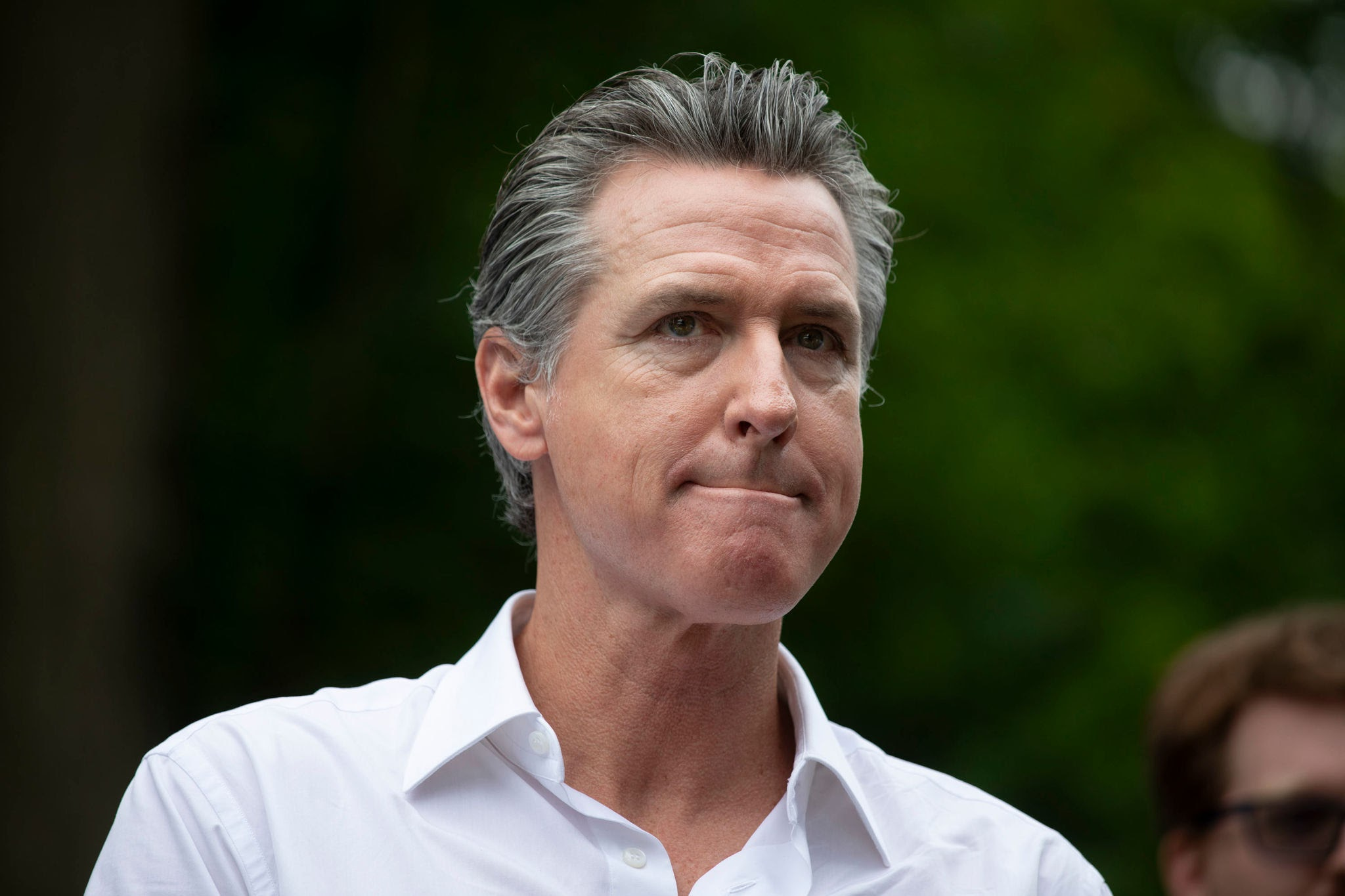
NCH Statement on California Governor Executive Order to Clear Encampments

Last week, California Governor Gavin Newsom issued an Executive Order to forcibly remove people experiencing homelessness from state lands. This decision brings with it severe and predictable consequences, reflecting a grave injustice. The National Coalition for the Homeless is taking a stand against this inhumane action. We urge you to read our official statement to understand our position and the critical issues at stake.
 

NCH is profoundly disappointed and troubled by this decision. Addressing homelessness is a multifaceted challenge that demands both compassion and thoughtful care.

 
Donald H. Whitehead, Jr., Executive Director of the National Coalition for the Homeless, emphasizes:
 
“The way a society treats its most vulnerable reflects its core values, priorities, and dedication to social justice. Criminalizing homelessness comes with serious repercussions—leading to increased costs, more suffering, and potentially even loss of life. This decision undermines our collective responsibility and commitment to addressing this pressing issue with the compassion it demands.”
 
Criminalizing homelessness comes with serious repercussions—leading to increased costs, more suffering, and potentially even loss of life. This decision undermines our collective responsibility and commitment to addressing this pressing issue with the compassion it demands.
 
It is essential to approach the issue of homelessness with boundless empathy, compassion, and commitment to finding sustainable solutions that prioritize the dignity and rights of all individuals, which is crucial for survival.
 
Encampment raids and forced evictions are not viable solutions; they only exacerbate the dire circumstances of those experiencing homelessness, who have nowhere else to turn.
 
Resorting to raids is a short-sighted and expensive approach that only exacerbates homelessness and increases the number of individuals forced to live on California’s streets.
 
Instead, Governor Newsom should focus on long-term solutions that tackle the systemic causes of homelessness, such as the shortage of affordable housing, unemployment, mental health challenges, structural racism, and substance abuse.
 
Providing adequate shelter, supportive services, and resources will better support people experiencing homelessness in transitioning to stable housing and improving their overall well-being.
 
NCH and its partners with lived experience are profoundly disheartened by this decision. However, this moment in history will not go unnoticed. While deeply saddened, the advocacy movement views this action as a powerful catalyst for change.

A Call to Unity in Johnson v. Grants Pass

In the face of ongoing challenges, the resilience of our community—particularly those with lived experience of homelessness—continues to inspire and drive change. One such pivotal moment of change is upon us, as the Supreme Court prepares to hear a case that could significantly impact the rights of homeless individuals across the nation: Johnson v. Grants Pass.

This landmark case centers on the rights of homeless individuals in Grants Pass, Oregon, challenging ordinances that penalize life-sustaining activities in public spaces. At its heart, Johnson v. Grants Pass isn’t just about one town; it’s a reflection of the broader struggle for dignity, respect, and the right to exist in public spaces without fear of harassment or punishment.

The Issue at Hand

For too long, our brothers and sisters without homes have faced legal and societal barriers that criminalize their existence. Sleeping, eating, and performing other necessary life activities in public spaces—their last resort—are met with penalties rather than support. Johnson v. Grants Pass brings these injustices to the forefront, challenging us all to reconsider how we treat the most vulnerable among us.

Your Voice is Your Power

This case is a rallying cry for all who believe in justice and human rights. It’s a reminder that together, we can challenge the status quo and advocate for policies that uplift rather than oppress. Your voice is critical in this fight.

Call to Action

Your involvement signifies more than just your support; it embodies hope, unity, and the unwavering belief that change is possible. Let’s stand together for justice, for dignity, and for the rights of all individuals to live freely and without fear.

Here’s how you can stand in solidarity:

  1. Sign the Petition: Add your name to the growing list of individuals calling for an end to the criminalization of homelessness. Each signature sends a strong message to policymakers about the public’s demand for compassionate and humane treatment of all individuals, regardless of their housing status.
  2. Join us for the Housing Not Handcuffs Rally on April 22, 2024, at the Supreme Court: Mark your calendars and make your presence felt. This rally isn’t just about making noise; it’s about showing the strength of our community and the depth of our commitment to change.
  3. Join with communities across the country in holding coordinated actions on April 22nd! Click here to let us know about your local event, or to learn more about what might be happening in your community. Check out our Organizing Skill Share guide for action inspiration and guidance. 

We know that laws are passed and enforced locally. Your City Council, Mayor, and police are the ones implementing anti-homeless policies (such as sweeps) now. So, local actions are really important, in addition to actions in front of the U.S. Supreme Court.

A small group of people can have a BIG impact! Together, we can demonstrate the collective power of individuals united for a common cause.

The Journey Ahead

The path to justice is long and fraught with challenges, but it’s a journey worth taking. Johnson v. Grants Pass is more than a legal battle; it’s a moral one. It’s about affirming the right of every individual to live with dignity and without fear. As we stand on the brink of this historic moment, let’s come together to support those who have been marginalized and to show that humanity and compassion can prevail over indifference and injustice.

Together, We Can Make a Difference

To learn more about Johnson v. Grants Pass and stay informed on the latest developments, here are several avenues you can explore:

  • Official Johnson v Grants Pass Case site
  • NCH info on Criminalization
  • National Homelessness Law Center and the Housing Not Handcuffs Campaign
  • National Alliance to End Homelessness
  • Supreme Court’s Official Website: The United States Supreme Court’s official website offers access to court documents, including briefs, oral arguments, and opinions related to the case. This is a primary source for accurate and up-to-date information.
  • Congressional leaders have unveiled the FY24 THUD spending bill, earmarking significant funding for the Department of Housing and Urban Development (HUD) programs focused on affordable housing and homelessness. The bill allocates $70 billion to HUD, marking an $8.3 billion increase from the FY23 levels. This funding boost is seen as a major achievement for the National Low Income Housing Coalition (NLIHC)’s national HoUSed campaign, advocates nationwide, and congressional supporters such as Senators Brian Schatz and Cindy Hyde-Smith, along with Representatives Tom Cole and Mike Quigley.

Key Highlights of the FY24 Transportation, Housing and Urban Development (THUD) Spending Bill (excerpted from the National Low Income Housing Coalition – Full link https://nlihc.org/resource/despite-tight-topline-funding-advocates-and-key-congressional-champions-secure-increased)

Noteworthy Funding Details:

– The Housing Choice Voucher (HCV) program receives a substantial increase, funded at $32.4 billion, allowing for the renewal of all existing rental assistance contracts and expanding assistance to 3,000 additional households.

– Homeless Assistance Grants see a $418 million increase, totaling $4.05 billion.

– The Public Housing Capital and Operating Funds receive modest increases, with the Capital Fund at $3.41 billion and the Operating Fund at $5.5 billion.

– The Native American Housing Block Grant is boosted by $324 million, reaching $1.1 billion.

– Despite some programs facing cuts, such as the HOME Investment Partnerships Program and the Choice Neighborhoods, significant resources are allocated across various housing and homelessness initiatives.


Analysis of Specific Programs:

– Tenant-Based Rental Assistance is set at $32.4 billion, aiming to renew all existing contracts and expand support.

– Public Housing funding includes slight increases for capital and operating funds, with a total of $3.4 billion for the capital account.

– The bill also emphasizes homelessness programs, allocating $4.05 billion for Homeless Assistance Grants, indicating a focused effort to address the homelessness crisis.

Overall Impact:

The FY24 spending bill represents a significant step towards addressing affordable housing and homelessness challenges in the U.S. While it marks progress, NLIHC and its allies continue to advocate for sustained and comprehensive investment in housing assistance to meet the growing needs of Americans facing housing insecurity.

NLIHC Budget Chart FY2024


Written by: NCH Policy Lead, Michele Williams ; Edited by Kenia Mazariegos

Photo by Lara Jameson

We are deeply concerned about the recent findings presented in the Department of Housing and Urban Development’s (HUD) Annual Homeless Assessment Report (AHAR). The report reveals a disturbing 12% overall increase in the number of individuals experiencing homelessness across the nation from 2022 to 2023. This data highlights the pressing need for immediate action to ensure the protection of the human right to housing.

According to AHAR report findings, the number of people experiencing homelessness is the highest since the reporting began in 2007, painting a bleak picture of the current housing crisis. These stark developments are a somber reminder of the inaction and lack of prioritization when it comes to addressing the root causes of homelessness in our country.

We firmly believe that housing is a fundamental human right and cannot overlook the fact that these findings reflect an urgent need for more comprehensive and proactive measures to combat the growing crisis of homelessness in our communities.

As the AHAR report underlines the gravity of the situation, we at NCH urge all stakeholders including government agencies, policymakers, and community leaders to collaborate and redouble their efforts to proactively address homelessness. We call for the immediate allocation of resources and the implementation of long-term solutions that prioritize access to safe and affordable housing for all.

To underscore the need for swift access to housing, communities across the country will commemorate Homeless Persons’ Memorial Day this week (December 21), remembering thousands of neighbors, family members and friends who have passed away prematurely due to lack of permanent and safe housing.

 Today, join the National Coalition for the Homeless, the National Health Care for the Homeless Council, and the National Consumer Advisory Board to remember the lives of those we have lost this year and continue our fight to end homelessness. NHCHC CEO Bobby Watts and NCH Executive Director Donald Whitehead will speak, along with Reverend Dr. Elizabeth Theoharis from the Poor People’s CampaignWarren Magee, NCAB Steering Committee member and Chair of the Consumer Advisory Board at Boston Health Care for the Homeless; Dr. Catherine Crosland, Director of Homeless Outreach Development at Unity Health Care in Washington, D.C.; and Madalyn KarbanBhavana Akula, and Ishaan Akula from NCH’s National Youth Division, Bring America Home NOW.The program will also feature art by artist and advocate Tammy De Grouchy Grubbs and an original spoken word performance from Charlotte A. Garner, Regional Representative, NCAB Board Steering Committee, Chair of the Ellen Dailey Advocacy Committee, and Chair of the Healthcare for the Homeless Houston Change Committee. If your community is hosting a memorial, please register your event here.
On this day, we come together as a community to mourn and remember those we have lost due to homelessness. It is a solemn occasion that reminds us of the dire consequences posed by the lack of stable, secure housing for our most vulnerable neighbors.

Together, let us reaffirm our commitment to upholding the right to housing and work towards a future where homelessness is eradicated, and every individual has a place to call home.
Join us for HPMD

The National Coalition For The Homeless is releasing a vital informative report called Design Against Humanity, highlighting the many ways that Hostile Architecture is used to prevent full use of public space, especially by certain members of our communities. 

We have witnessed many examples of hostile architecture in the five cities visited so far on the Local Power Tour – Los Angeles, Sacramento, Seattle, Miami and Atlanta. Most all the cities placed boulders throughout underpasses or in front of city buildings, have benches with bars in the middle, and/or use eco blocks to prevent RVs from stopping and parking.  

Seattle had the most aggressive usage of some of these methods. There were eco blocks in industrial areas installed by the local businesses to ensure no RVs or cars could park near or in front of their businesses. There were fenced off areas surrounding underpasses and anywhere people could possibly stop and rest.  

Los Angeles uses loud music in their metro stations and, after a recent sweep in Hollywood, planters of various sizes were installed to avoid the return of long term residents, their tents and belongings.  

Miami has double fencing surrounding their underpasses to prevent people from seeking shelter from the extreme heat and rainstorms. Atlanta has employed similar tactics installing boulders under the highways as well.  

The use of these forms of hostile architecture often result in forcing the unhoused to go into hiding and relocate, often far away from any social services.  It all reads like a slow migration to push the unhoused farther and farther out of site and further from permanent housing. But many of these efforts also make public spaces unwelcome to people who have disabilities, families, and older persons. 

Many people are not aware of, or do not notice, hostile architecture. Once we understand the examples, we start to see just how much our cities have made public space unwelcoming. This report will help educate and aid our communities and elected officials in understanding the struggles of the people displaced around their cities, where the architecture is often designed to work against them.  

  • Written by Mary Cellini, who leads an NCH Field Office from her organization Housing is Human Right, a project of the Aids Health Foundation. 

This tradition is rooted in remembrance and in the commitment to lasting change.

On December 18th, we invite you to join us from wherever you are for a livestream of this year’s Homeless Persons’ Memorial Day ceremony. This annual day of remembrance brings communities together to honor the lives of people who died while experiencing homelessness over the past year. Register here to attend the virtual ceremony.

Memorial Event Livestream
Date: Thursday, December 18th, 2025
Time: 11 a.m. PST / 12 p.m. MST / 1 p.m. CST / 2 p.m. EST

A full list of speakers for the event will be shared during the livestream.

The National Coalition for the Homeless, the National Health Care for the Homeless Council, and the National Consumer Advisory Board encourage communities across the country to mark Homeless Persons’ Memorial Day on or around the winter solstice, the first day of winter and the longest night of the year. This tradition is rooted in remembrance and in the commitment to lasting change. As night stretches across the nation, we pause to honor neighbors, friends, and loved ones who lost their lives without the basic security of a home.

Each year, this ceremony serves as a moment to acknowledge the injustice of lives cut short, to reaffirm our shared responsibility to protect the dignity of every person, and to renew our dedication to a future where housing is guaranteed to all. Communities across the country join in this observance to make clear that no one should die for lack of housing. You can learn more about the significance of this day through our HPMD Advocacy Agenda.

If you would like to host a local event, there are many ways communities take part, including candlelight gatherings, readings of names, spiritual services, marches, and public education efforts. Resources for planning an event, last year’s national livestream, and information on local activities and mortality data are available here.

If you wish to honor someone who has died while experiencing homelessness in your community, you may submit their name for inclusion in our “in memoriam” video during the livestream ceremony. You can share a name by clicking here.

As the longest night of the year approaches, we hope you will join us in remembrance and reflection. Together, we carry forward the work of ensuring that no life is lived or lost without the dignity of a safe and stable home.

The National Coalition for the Homeless expresses deep concern over the U.S. Department of Housing and Urban Development’s (HUD) 2025 Continuum of Care (CoC) Notice of Funding Opportunity (NOFO). The new NOFO abandons decades of evidence-based practice by limiting all permanent housing, including Permanent Supportive Housing (PSH), Rapid Re-Housing (RRH), and Joint TH-RRH, to just 30% of available funding, forcing communities to cut the housing interventions proven to end homelessness. 

“HUD’s new priorities turn back the clock on everything we know works,” said Donald Whitehead, Executive Director of NCH. “This NOFO will destabilize local homelessness systems and push thousands of people back into crisis. It is a devastating departure from evidence, humanity, and common sense.” 

Independent assessments indicate that up to 171,000 people currently living in permanent supportive housing could lose their homes due to these changes, not because of program failure, but solely because HUD has chosen to defund the most effective solutions. 

Pathologizing Poverty and Ignoring Structural Causes
HUD’s new approach reframes homelessness as a problem of personal behavior, focusing heavily on addiction, mental illness, and treatment compliance. This shift reinforces harmful stereotypes rather than addressing root causes such as the lack of affordable housing, wage stagnation, racial inequities, and the disappearance of low-cost units like SROs. “Most people experiencing homelessness are not dealing with severe mental illness or addiction,” Whitehead emphasized. “They are people who can’t afford rent; workers, parents, seniors, youth, and people priced out by an economy that no longer matches wages to housing costs.” 

Criminalization Is Not a Housing Strategy
The NOFO incentivizes programs that coordinate with law enforcement, enforce camping bans, or require mandatory participation in treatment or employment programs. These tactics echo failed strategies that criminalize homelessness and worsen barriers to stability. “We cannot arrest or coerce our way out of homelessness,” added Whitehead. “Criminalization wastes resources, retraumatizes people, and distracts from the real solution: permanent housing.” 

Permanent Housing Ends Homelessness
For more than two decades, communities across the country have shown that permanent housing paired with voluntary services leads to stability, recovery, and cost savings. HUD’s current direction undermines this proven approach. “Every time we have invested in permanent housing, homelessness has gone down,” Whitehead said. “Every time we withdraw that investment, homelessness rises. The pattern is undeniable.” 

A Call for Federal Leadership Rooted in Justice and Reality
NCH urges the Administration to reconsider the harmful 2025 NOFO and prioritize long-term, evidence-based solutions. “We need leaders who understand that homelessness is a structural crisis, not a moral failing,” Whitehead said. “This nation deserves a federal response grounded in data, dignity, and the lived experiences of the people most affected.” NCH remains steadfast in its commitment to advancing policies that truly end homelessness, and will continue to advocate for federal leadership that prioritizes housing, dignity, and evidence over ideology. 

UPDATES:
Dec. 8, 2025 HUD took down the dangerous Notice of Funding Opportunity (NOFO) ahead of lawsuits
Dec. 10, 2025 Nation’s Mayors Call on Congress to Renew HUD Continuum of Care Grants, Safeguard Housing for Vulnerable Residents

Everyone deserves the safety and dignity of a home. 

We at the National Coalition for the Homeless (NCH) find it reprehensible that last week, a newscaster on a major TV network, publicly advocated murdering people who are unhoused and experiencing health crises.

Negative rhetoric directed at people experiencing homelessness not only breeds stigma and discrimination but can also fuel violence and aggression against vulnerable populations. NCH has documented thousands of alarming instances of violence targeting those facing homelessness, a tragic reality that underscores the profound consequences of dehumanizing language. 

Furthermore, the commentators showed a fundamental lack of understanding of the everyday experience of regular people in this country. There is no community in the country that has enough affordable housing or emergency shelter to meet the need. Our health care system is extremely expensive, and treatment is often either too costly, not covered by insurance, or not even available in a community.

When influential platforms propagate misinformation or violent rhetoric, it normalizes harmful attitudes and emboldens those with violent tendencies. We must hold our journalists and media figures to account for the power of their words and the impact they can have on society. 

We demand that FoxNews apologize, and ‘Fox and Friends’ co-host Brian Kilmeade be reprimanded for suggesting that people experiencing homelessness or mental health crises be euthanized. 

We must strive for a society that prioritizes care, compassion, and comprehensive support for everyone. It is vital that we challenge and denounce rhetoric that dehumanizes vulnerable populations. 

Housing ends homelessness, and the country has more than enough resources to ensure we all have a safe home and that our basic human needs are met.

Homelessness ends when we all have safe, affordable and accessible housing.

But our communities are facing unprecedented challenges to our collective safety and efforts to house all of our neighbors.

This page serves as a resource for those fighting back against occupation in Washington, DC, as well as other communities that have been experiencing militarization and abductions of immigrants, people of color, and people who are unhoused.


More Background:

Taking Action:

DC Info and Resources:

Cities Nationwide – Know-Your-Rights and other Info

“You can’t arrest yourself out of homelessness,” Donald Whitehead ED @NCH

On CNN, National Coalition for the Homeless Executive Director Donald Whitehead delivers an urgent message about the White House’s escalating threats to people experiencing homelessness and the troubling ripple effects now being felt in our nation’s capital.

In this powerful interview, Donald exposes the harmful policies that jeopardize the safety, dignity, and basic human rights of our unhoused neighbors. He calls out both the recent cuts to HUD programs, critical lifelines that fund housing and services, and the growing push, seen in DC’s new ordinance, to forcibly clear encampments and funnel people into institutions against their will.

This is not just a political issue. It is a fight for human lives. The choices made will determine whether we build a society rooted in compassion or one that criminalizes poverty. Watch the video now and share it widely. Our voices matter, and together we can demand housing, dignity, and justice for all.

Trump signs two executive orders aimed at “Ending Crime and Disorder on America’s Streets” that will actually make our cities more dangerous for residents who are poor.

WASHINGTON, D.C. – July 24, 2025 – Today, the Trump administration issued two executive orders that fundamentally misrepresent homelessness as a criminal issue rather than a societal challenge requiring compassionate and systemic solutions. The National Coalition for the Homeless (NCH), dedicated to addressing the root causes of homelessness since the 1980s, strongly condemns these directives as ineffective, wasteful, and a grave violation of civil rights.

The first executive order threatens to withhold Housing and Urban Development (HUD) funding from states that protect individuals from involuntary commitment to institutional care. The second order, contradictory to the first, proposes allowing Medicaid funding for mental health treatment.

“Everyone deserves a safe place to live,” stated Donald Whitehead, Jr., NCH Executive Director. “These executive orders ignore decades of evidence-based housing and support services in practice. They represent a punitive approach that has consistently failed to resolve homelessness and instead exacerbates the challenges faced by vulnerable individuals.”

This administration has a concerning record of disregarding civil rights and due process, as evidenced by recent actions concerning immigrants. These executive orders direct Attorney General Pam Bondi to challenge existing judicial precedents and consent decrees in communities where the civil rights of people experiencing homelessness or mental health crises have been violated.

The assertion that the majority of individuals experiencing unsheltered homelessness are “addicted to drugs, have a mental health disorder, or both” is inaccurate. Furthermore, it disregards the reality that many individuals develop mental health or substance abuse issues after prolonged periods of homelessness due to the lack of safe and affordable housing.

As the executive order itself acknowledges, the Supreme Court has established due process protections that safeguard individuals from involuntary confinement in psychiatric hospitals. Historical attempts at mass institutionalization proved destructive to individuals’ lives and financially unsustainable for states. The original intent of deinstitutionalization in the 1970s was to accompany community re-integration with comprehensive housing and support services—a commitment that, tragically, remains underfunded and unfulfilled, both then and now.

The National Coalition for the Homeless reiterates that the definitive solution to homelessness is housing. Ensuring safe places to live and access to support services is not only a moral imperative but also the most effective strategy for building safer and more equitable communities.

Inviting one and all to the Annual NCH Awards Dinner and Auction – celebrating achievements in advocacy for our unhoused neighbors and raising funds to keep doing the work!

Over the last year, we have made significant progress in mobilizing people with lived experience to combat the costly practice of jailing, fining, and arresting people who are forced to experience unsheltered homelessness due to the lack of shelter.

Come celebrate our awardee advocates and organizations who have made significant contributions to lifting up the first hand experience of those who have been unhoused:

Many nonprofits are experiencing federal funding cutbacks and uncertainty due to changes that strain resources targeted at combating homelessness. The Executive Order signed a week ago will have further disastrous affects for our neighbors forced to sleep outdoors. Our role as the nation’s first homeless advocacy organization is more important than ever.

Please help support our critical work at the upcoming NCH Awards Dinner, which will take place at the Woodmore Country Club, just outside the Capitol beltway, on August 8, 2025, from 5:30 to 8 PM. Our guest MC will be the Honorable Terrence McAuliffe, former Governor of Virginia. Come to hear national recording artist, Shelton Cornelius Price, and enjoy the opportunity to connect, celebrate, and learn more about the vital work NCH and our partners do to address homelessness nationwide.

If you cannot attend, we encourage you to sponsor the event or contribute to helping a member of our speaker’s bureau or someone experiencing homelessness in your community attend. Tickets can be purchased by following this link: https://bit.ly/NCHawards.

Your involvement, in any capacity, will help amplify our mission and make a tangible impact on the lives of countless individuals. We look forward to seeing you there!

A special thanks to our generous sponsors:

We all need a safe place to live. But homelessness and poverty are growing. Instead of funding what works, too many politicians are making these problems worse by passing laws that allow the police to ticket and arrest people who cannot afford housing or the substance use or mental health care they need.

We need leaders who focus on real solutions that help people, like housing and healthcare. Ticketing or fining people for sleeping outdoors when they have no where else to go moves our communities backwards – creating barriers to housing instead of enacting proactive and proven programs that provide housing and services.

We have the solutions!
Click to join our webinar series examining each of the 10 Points.

In place of criminalizing daily survival activities, we offer this 10-Point framework for state and local communities to respond with compassion and proven solutions. 

  1. Affordable and Accessible Housing
  2. Homelessness Prevention
  3. Decriminalization of Poverty
  4. Shelter Standards and Expanded Shelter Options
  5. Employment Programs
  6. Trauma-Informed Care
  7. Treatment on Demand
  8. Encampment Infrastructure
  9. Friendly Architecture
  10. Equity in Impact

The NCH 10-Point Model Homeless Legislation template is designed to complement NCH’s national Bring America Home Now! Campaign, which consists of six policy pillars at the national level and is a grassroots movement to end and prevent homelessness:

  • Housing justice: housing is a basic human right
  • Universal access to health care
  • Livable wages and basic income
  • Education and training
  • Protecting civil and voting rights
  • Recognizing homelessness as a racial justice and equity issue

NCH strongly believes that as localities and states consider the components of this template, it is imperative that people with lived experience of homelessness, mental health challenges, and substance use issues are integral to the decision-making process, program design, and policy and program implementation.

With Congress’s passage of the mega budget deal today, we have witnessed the most disastrous legislation in modern history.  The budget bill steals from the poor to give massive tax cuts to the wealthy. And these tax breaks are such enormous giveaways to the rich that they will increase the deficit by nearly $4 trillion, even with the draconian cuts to health care and food assistance

The Bill will also create a private force as large as most countries to push the cruel anti-immigration policy.  It adds $4 trillion to the national debt.

It does not address the growing concerns of inflation and job loss.  The bill will result in a loss of an average of $1,000 in income for families below the poverty line. 

We fought hard, but the fight is not over.

We must get ahead of the next budget discussion. Today’s blow will be significantly magnified by projected loss of critical housing and supportive services foretold in the Presidential Administration’s “skinny budget” request for next year.

We cannot let elected officials forget who they have harmed by their decision to transfer even more wealth to the ultra rich, on the backs of seniors, people with disabilities, families unable to put food on the table. NCH encourages all of us who will be impacted by this dastardly budget to continue contacting our Congressional members – sharing how their callous decision will hurt their constituents.

We may rest this weekend, but we will keep fighting for true justice, equity, and a permanent end to homelessness.

In Solidarity,
Donald H. Whitehead Jr.
Executive Director

*Art courtesy pf Art Hazelwood and the Western Regional Advocacy Project

In the last 13 years, I’ve experienced homelessness twice. And while I’m grateful to have a roof over my head now, the fear of losing my home never really goes away.

Each time I’ve managed to find housing, it hasn’t been easy—it’s been a fight. A fight for something clean. A fight for something safe. A fight for something affordable. The cost of living is constantly rising while wages and opportunities lag, I’m constantly doing mental math to figure out if I can make it another month.

Rent goes up, groceries go up, utilities go up—but my income doesn’t always follow. I’ve worked hard in customer service, in sales, and even started my own small business. I’ve applied for jobs relentlessly. I’m not lazy. I’m not looking for a handout. I just want the chance to live without the fear that one unexpected bill or health issue will leave me on the street again.

What scares me even more is what’s happening across the country. The Supreme Court’s decision in Johnson vs. Grants Pass didn’t just make being homeless harder—it made surviving illegal. Cities have rushed to pass laws that criminalize people who are just trying to live through one more night. This hurts everyone, but especially those of us who are already most vulnerable: Black, Brown, immigrant, disabled, and LGBTQ+ people.

No one chooses to be homeless. But our system continues to choose to ignore the root causes: unaffordable housing, underpaid work, and the criminalization of poverty.

I’m sharing my story because housing is a human right. I know what it’s like to sleep in a car, to not know where I’ll go next, and to feel like the world would rather turn away than help.

We deserve better. I deserve better. And I’m standing with Housing NOW because our voices matter—especially the ones that have been silenced or pushed aside.

[Credits: Pixabay: hongquan7749]