
July 17, 2026
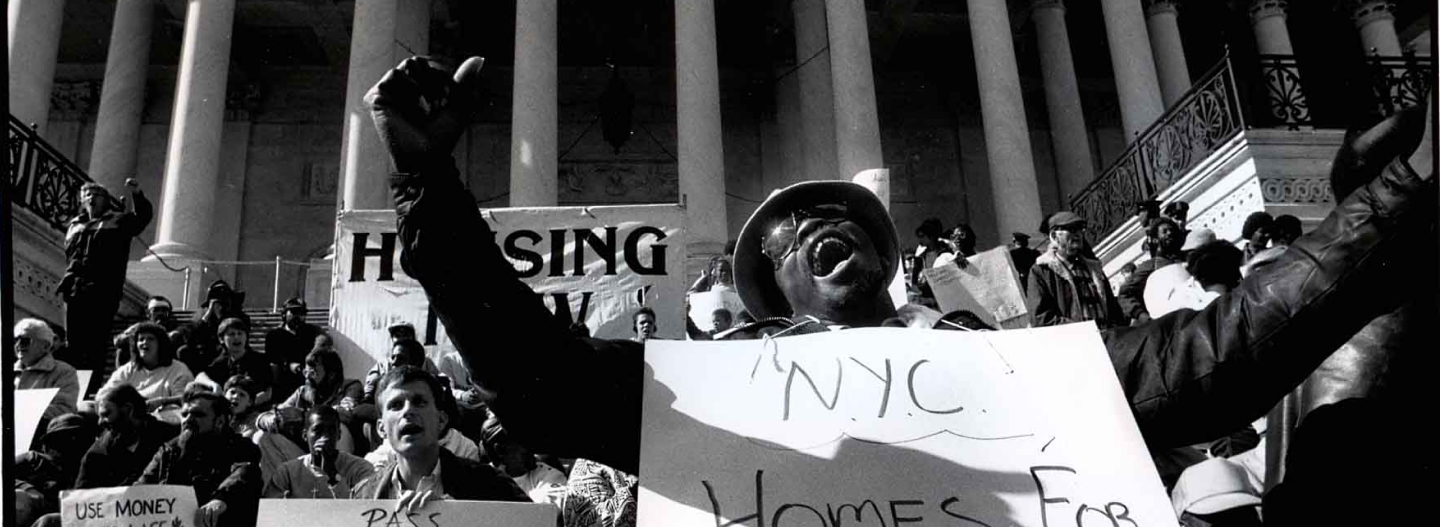
The recent announcement of funding for fiscal year 2026 Continuum of Care Program by HUD Secretary Scott Turner represents one of the most significant shifts in federal homelessness policy in decades. While we agree that people experiencing homelessness deserve access to quality health care, mental health services, substance use treatment, employment opportunities, and pathways to stability, we strongly disagree with HUD’s assertion that housing is not the foundation upon which those outcomes are built.
For forty years, the homelessness crisis in America has persisted not because we have focused too much on housing, but because we have never funded housing or services at the levels necessary to meet the need. The fundamental challenge facing millions of Americans is the lack of affordable housing. Rents have skyrocketed, wages have stagnated, and federal housing investments have failed to keep pace with the realities facing working families, seniors, veterans, and people with disabilities.
The narrative that homelessness is primarily the result of mental illness and addiction oversimplifies a complex issue and stigmatizes an entire population. The overwhelming majority of Americans experiencing homelessness are not homeless because they are mentally ill or addicted. They are homeless because they are poor. They are homeless because a missed paycheck, a medical emergency, domestic violence, the loss of a job, or the rising cost of housing pushed them beyond the breaking point.
The National Coalition for the Homeless believes that treatment should be available to everyone who needs it. Recovery services save lives. Mental health care saves lives. Employment support saves lives. But none of those interventions can be fully effective when a person is sleeping under a bridge, in a vehicle, or in an emergency shelter. Housing should not be the reward for recovery; housing is the platform that makes recovery possible.
What concerns us most is the shift away from evidence-based interventions such as permanent supportive housing and other approaches that have demonstrated success across the country. Communities have spent decades building systems based on research, best practices, and lived experience. Abruptly shifting resources away from permanent housing risks destabilizing programs that currently serve some of the nation’s most vulnerable residents, including veterans, seniors, people with disabilities, and families with children. More importantly, this shift will result in tens of thousands of people losing their housing.
Those risks are not theoretical. HUD’s fiscal year 2026 Continuum of Care Notice of Funding Opportunity (NOFO) makes $4.04 billion available nationwide but shifts the competition by protecting only 60 percent of funding while making 40 percent fully competitive, compared with a prior framework in which nearly 90 percent of funds were treated as protected renewals. The NOFO also creates a $1.3 billion set-aside for new projects, with priority for transitional housing and supportive services-only projects, a change housing advocates warn could sharply reduce resources available for permanent supportive housing and rapid re-housing. The National Alliance to End Homelessness estimates that at least 97,000 people currently in CoC-funded permanent housing are likely to lose their homes because of this approach; other analyses warn that as many as 170,000 households could be placed at risk if funding for permanent housing is substantially redirected.
We are also troubled by the growing emphasis on law enforcement and public-order approaches to homelessness. History has repeatedly shown that criminalizing poverty does not reduce homelessness; it simply makes homelessness more dangerous, more expensive, and less visible. Sweeps, citations, arrests, and forced displacement do not create housing. They do not increase incomes. They do not address the shortage of affordable homes.
At a time when homelessness remains at crisis levels, America should be expanding its investments in affordable housing, prevention, rental assistance, health care, and economic opportunity. We should strengthen the safety net, not weaken it. We should listen to people with lived experience, not speak about them as problems to be managed.
The National Coalition for the Homeless stands ready to work with HUD, Congress, local communities, service providers, and people with lived experience to create real solutions. But those solutions must be rooted in evidence, dignity, civil rights, and the understanding that housing is a basic human need.
We cannot treat our way out of a housing shortage. We cannot arrest our way out of poverty. And we cannot build a nation where every person has the opportunity to thrive unless we are willing to invest in the housing and economic security that make thriving possible.
The question before us is not whether people deserve treatment. The question is whether we have the courage to ensure that every American has a safe, affordable place to call home.
PREVIOUS STATEMENTS:
Dec. 8, 2025 HUD took down the dangerous Notice of Funding Opportunity (NOFO) ahead of lawsuits
Dec. 10, 2025 Nation’s Mayors Call on Congress to Renew HUD Continuum of Care Grants, Safeguard Housing for Vulnerable Residents
