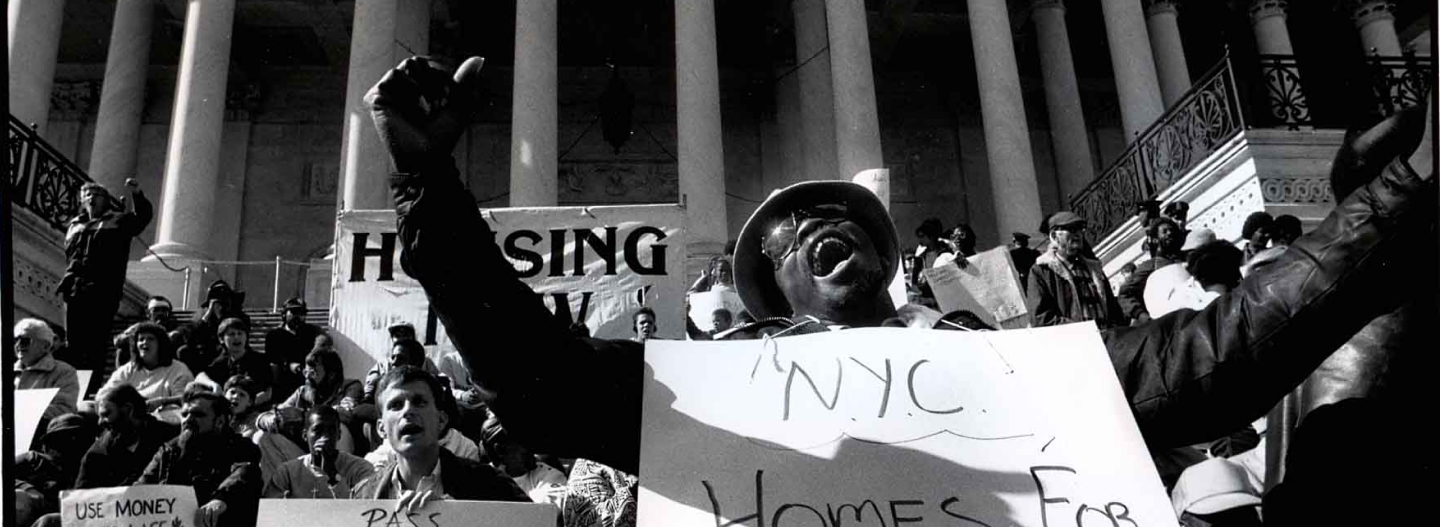
Local Strategies – The 10-Point Plan

We all need a safe place to live. But homelessness and poverty are growing. Instead of funding what works, too many politicians are making these problems worse by passing laws that allow the police to ticket and arrest people who cannot afford housing or the substance use or mental health care they need.

We need leaders who focus on real solutions that help people, like housing and healthcare. Ticketing or fining people for sleeping outdoors when they have no where else to go moves our communities backwards – creating barriers to housing instead of enacting proactive and proven programs that provide housing and services.

We have the solutions!
Click to join our webinar series examining each of the 10 Points.

In place of criminalizing daily survival activities, we offer this 10-Point framework for state and local communities to respond with compassion and proven solutions. 

  1. Affordable and Accessible Housing
  2. Homelessness Prevention
  3. Decriminalization of Poverty
  4. Shelter Standards and Expanded Shelter Options
  5. Employment Programs
  6. Trauma-Informed Care
  7. Treatment on Demand
  8. Encampment Infrastructure
  9. Friendly Architecture
  10. Equity in Impact

The NCH 10-Point Model Homeless Legislation template is designed to complement NCH’s national Bring America Home Now! Campaign, which consists of six policy pillars at the national level and is a grassroots movement to end and prevent homelessness:

  • Housing justice: housing is a basic human right
  • Universal access to health care
  • Livable wages and basic income
  • Education and training
  • Protecting civil and voting rights
  • Recognizing homelessness as a racial justice and equity issue

NCH strongly believes that as localities and states consider the components of this template, it is imperative that people with lived experience of homelessness, mental health challenges, and substance use issues are integral to the decision-making process, program design, and policy and program implementation.

With Congress’s passage of the mega budget deal today, we have witnessed the most disastrous legislation in modern history.  The budget bill steals from the poor to give massive tax cuts to the wealthy. And these tax breaks are such enormous giveaways to the rich that they will increase the deficit by nearly $4 trillion, even with the draconian cuts to health care and food assistance

The Bill will also create a private force as large as most countries to push the cruel anti-immigration policy.  It adds $4 trillion to the national debt.

It does not address the growing concerns of inflation and job loss.  The bill will result in a loss of an average of $1,000 in income for families below the poverty line. 

We fought hard, but the fight is not over.

We must get ahead of the next budget discussion. Today’s blow will be significantly magnified by projected loss of critical housing and supportive services foretold in the Presidential Administration’s “skinny budget” request for next year.

We cannot let elected officials forget who they have harmed by their decision to transfer even more wealth to the ultra rich, on the backs of seniors, people with disabilities, families unable to put food on the table. NCH encourages all of us who will be impacted by this dastardly budget to continue contacting our Congressional members – sharing how their callous decision will hurt their constituents.

We may rest this weekend, but we will keep fighting for true justice, equity, and a permanent end to homelessness.

In Solidarity,
Donald H. Whitehead Jr.
Executive Director

*Art courtesy pf Art Hazelwood and the Western Regional Advocacy Project

The National Coalition for the Homeless is thrilled to announce that the 2025 National Lived Experience Leadership Conference will be held both Virtually and in-Person in Cincinnati, OH, November 17-19, 2025.

More details will be release soon.

RESERVE YOUR COPY TODAY

The National Coalition for the Homeless (NCH) is proud to introduce The Homeless Advocate, our first-ever quarterly magazine dedicated to uplifting the voices of those directly impacted by homelessness and spotlighting the advocates fighting for change every day. This groundbreaking publication is a powerful platform for bold storytelling, critical conversations, and forward-thinking solutions to end homelessness across the nation.

With a dynamic readership of policymakers, service providers, grassroots organizers, and individuals with lived experience, The Homeless Advocate is more than a magazine — it’s a movement.

Reserve your copy today — limited quantities available!

ADVERTISE WITH PURPOSE

Elevate your brand while supporting a vital cause. Advertising in The Homeless Advocate not only promotes your business but also contributes to raising awareness and funding efforts to end homelessness. Partner with us to reach a compassionate and engaged audience. Explore advertising opportunities today and make a lasting impact!

In the last 13 years, I’ve experienced homelessness twice. And while I’m grateful to have a roof over my head now, the fear of losing my home never really goes away.

Each time I’ve managed to find housing, it hasn’t been easy—it’s been a fight. A fight for something clean. A fight for something safe. A fight for something affordable. The cost of living is constantly rising while wages and opportunities lag, I’m constantly doing mental math to figure out if I can make it another month.

Rent goes up, groceries go up, utilities go up—but my income doesn’t always follow. I’ve worked hard in customer service, in sales, and even started my own small business. I’ve applied for jobs relentlessly. I’m not lazy. I’m not looking for a handout. I just want the chance to live without the fear that one unexpected bill or health issue will leave me on the street again.

What scares me even more is what’s happening across the country. The Supreme Court’s decision in Johnson vs. Grants Pass didn’t just make being homeless harder—it made surviving illegal. Cities have rushed to pass laws that criminalize people who are just trying to live through one more night. This hurts everyone, but especially those of us who are already most vulnerable: Black, Brown, immigrant, disabled, and LGBTQ+ people.

No one chooses to be homeless. But our system continues to choose to ignore the root causes: unaffordable housing, underpaid work, and the criminalization of poverty.

I’m sharing my story because housing is a human right. I know what it’s like to sleep in a car, to not know where I’ll go next, and to feel like the world would rather turn away than help.

We deserve better. I deserve better. And I’m standing with Housing NOW because our voices matter—especially the ones that have been silenced or pushed aside.

[Credits: Pixabay: hongquan7749]

Oppose Cuts to Housing and Homelessness Programs in Trump’s FY2026 Budget

The National Coalition for the Homeless strongly opposes President Donald J. Trump’s proposed Fiscal Year 2026 budget. Presidential budgets reflect an administration’s core principles and priorities. President Donald J. Trump’s proposed Fiscal Year 2026 budget signals a troubling lack of concern for vulnerable populations, including children, elderly veterans, and marginalized communities. Rather than upholding a vision of equity and care, the proposal suggests a retreat from programs that provide critical support to those most in need.

[ TAKE ACTION: SEND A LETTER TO CONGRESS ]

Budgets are more than just financial documents; they are moral and political statements that reveal an administration’s priorities, values, and ambitions. When a president releases a budget proposal, it is not merely a matter of accounting—it is a roadmap that outlines the administration’s vision for the nation, underscoring the programs it seeks to fund, the initiatives it aims to curtail, and the populations it intends to support or deprioritize. Analyzing these budgets is critical in understanding the immediate fiscal realities and the long-term implications on society.

A presidential budget is rarely enacted in its original form. Rather, it serves as a starting point for negotiations among Congress, advocacy groups, and the public. The budget debate often becomes a reflection of broader ideological divisions, with each side using funding priorities to advance its vision for the country.

Donald Whitehead, the Executive Director of the National Coalition for the Homeless, asserts that the President’s budget blatantly disregards marginalized communities. “Last year, we witnessed the highest number of individuals experiencing homelessness, and the administration proposes to abandon effective, evidence-based strategies in favor of approaches that will precipitate a catastrophic surge in homelessness. If implemented in its current form, this budget has the potential to cause preventable deaths.”

President Trump’s proposal includes a $26.72 billion cut to HUD’s rental assistance programs—including Housing Choice Vouchers (HCVs), Public Housing, Project-Based Rental Assistance (PBRA), Section 202 Housing for the Elderly, and Section 811 Housing for Persons with Disabilities—by consolidating them into a single State Rental Assistance Block Grant. This restructuring would amount to an unprecedented 43% reduction in rental assistance and impose a two-year time limit on rental aid for “able-bodied adults.” States would be “encouraged to provide funding to share in the responsibility to ensure that similar levels of recipients can benefit from the block grant.”

The budget also proposes a $532 million cut to Homelessness Assistance Grants (HAG), and the elimination of both the Continuum of Care (CoC) program and the Housing Opportunities for Persons with AIDS (HOPWA) program. These would be folded into the Emergency Solutions Grant (ESG) program. In addition, the Permanent Supportive Housing and VASH programs would be discontinued.

[ TAKE ACTION: SEND A LETTER TO CONGRESS ]

The proposal calls for the elimination of the Community Development Block Grant (CDBG) and HOME Investment Partnerships programs. It would also eliminate the Indian Housing Block Grant (IHBG) Competitive and Native Hawaiian Housing Block Grant programs, cutting $479 million and consolidating these into the formula-based IHBG program. The Family Self-Sufficiency (FSS) program would be discontinued as well, with the justification that “such programs are duplicative in purpose and would be better left to state and local governments.”

Further, the budget would reduce funding for HUD’s Healthy Homes and Lead Hazards programs by $296 million, citing existing unobligated balances. It would eliminate the Pathways to Removing Obstacles to Housing (PRO Housing) program, which incentivizes inclusive local zoning practices, and the Fair Housing Initiatives Program (FHIP), which supports the investigation and adjudication of housing discrimination complaints. The proposal would maintain support for the Fair Housing Assistance Program (FHAP), which funds state and local agencies tasked with enforcing the Fair Housing Act.

Take Action: Protect and Expand HUD’s Vital Affordable Housing and Homelessness Assistance Programs

  • Fully fund the renewal of all existing Housing Choice Voucher (HCV) contracts and 60,000 Emergency Housing Vouchers (EHVs).
  • Increase funding for public housing operations and public housing capital needs.
  • Allocate $4.922 billion for HUD’s Homeless Assistance Grants (HAG) program.
  • Provide $20 million for the Eviction Protection Grant Program (EPGP).
  • Ensure at least $1.3 billion for HUD’s Tribal housing programs and $150 million in competitive funds targeted to tribes with the greatest needs.

[ TAKE ACTION: SEND A LETTER TO CONGRESS ]

I have struggled to obtain secure housing my entire adult life; I am 38 years old. I played by all the “rules” and still ended up here. I did well in school, got good grades, and went on to graduate with a Bachelor’s degree from Purdue University where I was couch-surfing through at least one full academic year there because the cost of student housing was beyond affordable. I took out extra student loans to pay for rent for off-campus housing and lived off credit cards, all of which are drowning me now. I thought my struggle and financial distress were temporary and once I graduated I would land a job that paid a living wage.

After graduation, I was shocked to find that despite my research, no employer in my field- Social Work- pays a living wage and if there are roles that do, they require a Masters degree. So I served a year in AmeriCorps while I prepared to enter graduate school. I enrolled in the cheapest graduate program at $20k a year- Indiana University School of Social Work.

At the orientation for my MSW, I was informed that students are recommended to not work while in school. I was shaken to my core to hear that, considering I was renting an abandoned home owned by my family. It didn’t have a working shower or kitchen, but it was shelter. I also was skipping meals because I simply couldn’t afford to eat. I could not get EBT (food stamps) because my AmeriCorps stipend and student loans that went directly to my tuition were considered “income”.

That money barely graced my bank account before it directly went to the school. I worked over 50 hours/week between three jobs while working on my MSW; I even volunteered to coach youth sports and had to complete unpaid part time and full time internships. I don’t think I slept for the entire 2 years I was enrolled in the MSW program.

Despite the challenges, I completed my coursework in
18 months and graduated with one one-hundredth of a percentage point away from making the Dean’s List. I got a job weeks after graduation, however, I only made $12/hr as a mental health therapist and still struggled to afford the abandoned family home. I had to get roommates who eventually stole my life savings and any item I owned that had some value (things I had been gifted over the years).

I moved to Seattle for better work opportunities and a future, because that’s what people say right? Get a better job. Move. I did. Once in Seattle I began attending trainings to earn more certifications, hoping this would earn me a better wage. It did not.

I was making $14./hr when Seattle implemented the $15/hr minimum wage and my rent was $950. Again I was finding myself unable to afford food or even transportation. By the time my lease was ending, my landlord was raising my rent to $1200. I tried finding better paying jobs but they didn’t exist. I was facing homelessness so I left Seattle at the end of my lease to go back to Indiana where I could rent the abandoned family home again.

I lost my job in Indy and took the first job that was offered to me which landed me back in Seattle. This time I was living with an abusive partner but I had no choice- it was either stay in the DV situation or be homeless on the streets. I couldn’t afford our 1bd apartment at $1600 by myself working as a co-occurring disorder therapist with a laundry list of certifications and specialties at $17/hr in Seattle in 2017.

I nearly lost my life while in that abusive relationship, but luckily found roommates to split an attic converted into an apartment for $1900- 4 adults in a 2bdroom/1bath attic (one person slept in a closet turned bedroom, the married couple took a bedroom, and I got the laundry room/bedroom) we were pretty certain the space was not legal to rent to us in this way, but what choice did we have? Once our lease was ending in 2019, the landlords decided they wanted to cash in and sell the place that they had owned since the 1970s and had been renting out ever since.

I was again homeless since I could not find an affordable place in Seattle for a Social Worker making $19/hr, not to mention my student loans had tanked my credit by this point, dropping it down to the 500s despite the fact I have NEVER missed a credit card, utility, or rent payment before in my entire life. I have a squeaky clean record; never even gotten a detention before in school. No one would rent to me with that low of a credit score and I couldn’t afford the 3 months of rent due at lease signing as well as the extra fees just for being low income. I had to move back to Indiana and rented an unfinished unit from a friend in a duplex that said friend lived in. I didn’t have heat, a kitchen, or interior doors- their realtor suggested renting the place in that condition at $1000/month. I was making $13/hr working in DV services in Indianapolis in 2020.

I again lost my job in Indy and got into another abusive relationship to afford housing which led me back to Seattle in 2020. I landed a job that finally paid more than poverty wages- $25/hr, the most money I had ever seen in my life. I was able to leave the latest abusive relationship that also nearly ended my life (he had access to a lot of firearms, the odds were not in my favor and he made sure he reminded me of it daily. By the time I left, he forced me to sleep on the floor with the dogs).

Thankfully, I was making enough I could this time afford to leave before it got worse. The COVID relief stipend and the fact that rental prices dropped briefly during COVID-19 are the only reason I am alive today. I was able to find a 500sq ft apartment for $1200 that didn’t require a ton of extra fees. However, in 2022 my rent went up $300 a month which I was able to negotiate down to $150/month more. In 2023 the large equity group raised my rent again, however it turns out this equity group has been using software meant to artificially inflate the market rate and most places in Seattle use this to increase our rents to the point of homelessness.

In 2024 I was nearly homeless again because I struggled to find affordable housing after my rent on that 500sq ft apartment went up to $1900. I make roughly $70k a year, I have 2 college degrees, 20+ years of experience in my field, a laundry list of certifications and specialties in my field, and I work two other jobs (adjunct professor and artist) and I still can barely afford to live. I don’t have an extravagant lifestyle, I’m not bougie.

I live a very simple life and I don’t attend or purchase unnecessary events/things. My dog eats better than I do. I don’t even have a car, I sold it spring of 2023 because the cost for maintenance on my 2015 Chevy Terrain was too much not to mention the car insurance, registration fees, parking, and gas. I do everything I can to live within my means, but living is unaffordable.


[Credits: Pixabay: FrankyFromGermany]

Hi, my name is Jessica I suffer from PTSD, anxiety, bipolar, schizophrenia, depression, and ADHD. I’m struggling with my mental health and I’m currently homeless living in my car. I’ve never been this far off, I used to be independent, outgoing, and a workaholic. I was even very spunky, energetic, and funny.

I lost my dog in October 2023 he was my emotional support dog, he was my best friend, my child, and my better half. He made me happy and I loved him very much. He died in my arms I tried to give him CPR because he stopped breathing and it wasn’t enough to save him. I was devastated I’ve never cried so much in my entire life. We would go everywhere together I had him since he was a puppy. For 13 years he was my baby. I’ve lost everything except my car. I have had a hard time holding down a job because of my mental health issues, back problems, and breathing problems.

I’m so depressed without my baby. I don’t feel like doing anything anymore. All I want to do is stay in bed all day and night. I’ve lost my motivation, self-esteem, and everything else that I used to be. I’m in need of housing assistance.

I’ve been through a lot of traumatic situations ever since I was 11 years old. My parents did drugs and I then started using drugs when I was 13 years old. I struggle with addiction I lost my dad on August 11th, 2011 and he was everything to me. I’ve been molested by my grandfather when I was 11 years old. I’ve been in abusive relationships and toxic relationships. I’ve always taken care of everyone when they needed something.

I got a life insurance policy for my dad’s death in a car accident. I met this guy that cooked meth. I got a house, a car for myself, a car for my mom, a car for my stepdad, and a truck and my boyfriend at the time. As soon as we got to the house, my boyfriend started having his mooching friends come over and they would stay and never go home, always partying. They took advantage of me while I sat back and paid all the bills, bought groceries, and fed everyone while my boyfriend went on a shopping spree. They drained my bank account leaving it empty.

The drugs fried his brain, and he kept being admitted to the psych ward because he thought I was a devil. He read the Bible, thinking he was god. I was terrified of him. I had to get several orders of protection on him because I was scared to fall asleep. I got the house when I filed an order of protection on him because he was crazy. I didn’t know what happened to him; he lost his mind, and I’d never seen anything like this before.

He traumatized me for 2 years, took me for all my money, destroyed my house, and got his vehicle impounded for a meth lab in the back of his truck. He made me lose everything and I had to leave him or one of us was gonna end up dead. I moved in with my mom and tried to get help with my mental health issues and substance abuse issues. I kept running to the streets and eventually, she said no more and kicked me out. I’ve had nowhere to go, and no good, sober friends.

I have had no healthy support system, so I find myself getting into toxic, abusive relationships, and then I’d leave. I have struggled my whole life, and I was always there for everyone else except myself.

I’ve lost everything except my car, thankfully, I still have that. I’m trying to overcome my depression, anxiety, PTSD, bipolar disorder, schizophrenia, and ADHD. I’m currently seeing a provider and trying to get my medications under control. I am on the right path, and I’m interested in therapy and learning coping skills to help me with my current lifestyle. I’ve caught 2 retail theft cases for stealing stuff because I was in a psychosis. I’ve caught a possession charge for meth, a meth precursor charge, and a meth manufacturing charge. I want a new life. I’m tired of struggling. I want to be happy again. Please help me
.
[Credits: Pixabay: Pexels]

This field is required