Design Against Humanity

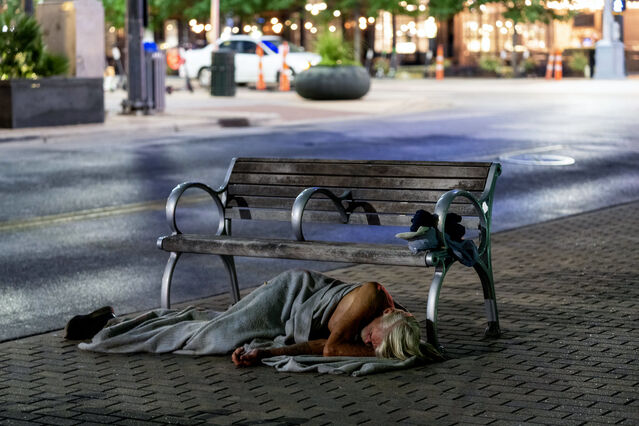
The National Coalition For The Homeless is releasing a vital informative report called Design Against Humanity, highlighting the many ways that Hostile Architecture is used to prevent full use of public space, especially by certain members of our communities. 

We have witnessed many examples of hostile architecture in the five cities visited so far on the Local Power Tour – Los Angeles, Sacramento, Seattle, Miami and Atlanta. Most all the cities placed boulders throughout underpasses or in front of city buildings, have benches with bars in the middle, and/or use eco blocks to prevent RVs from stopping and parking.  

Seattle had the most aggressive usage of some of these methods. There were eco blocks in industrial areas installed by the local businesses to ensure no RVs or cars could park near or in front of their businesses. There were fenced off areas surrounding underpasses and anywhere people could possibly stop and rest.  

Los Angeles uses loud music in their metro stations and, after a recent sweep in Hollywood, planters of various sizes were installed to avoid the return of long term residents, their tents and belongings.  

Miami has double fencing surrounding their underpasses to prevent people from seeking shelter from the extreme heat and rainstorms. Atlanta has employed similar tactics installing boulders under the highways as well.  

The use of these forms of hostile architecture often result in forcing the unhoused to go into hiding and relocate, often far away from any social services.  It all reads like a slow migration to push the unhoused farther and farther out of site and further from permanent housing. But many of these efforts also make public spaces unwelcome to people who have disabilities, families, and older persons. 

Many people are not aware of, or do not notice, hostile architecture. Once we understand the examples, we start to see just how much our cities have made public space unwelcoming. This report will help educate and aid our communities and elected officials in understanding the struggles of the people displaced around their cities, where the architecture is often designed to work against them.  

  • Written by Mary Cellini, who leads an NCH Field Office from her organization Housing is Human Right, a project of the Aids Health Foundation. 

We are deeply disappointed by the Supreme Court’s decision to eliminate Affirmative Action protections. Affirmative action was put in place to address racist discrimination in education  and employment. Affirmative action has proved to be a powerful vehicle to underminehistoric and systemic racism and help provide critical access to underrepresentedcommunities. This decision has the potential to negatively impact millions of people  experiencing homelessness, making it harder for individuals and families to access housing,  education, and economic opportunities. 

Already, people of color are disproportionately affected by poverty and homelessness. African  Americans, Native Americans, Hawaiian Pacific Islanders, Latinx/e, and Asians have endured centuries of historic racism and discrimination. The National Coalition for the Homeless and the homeless service community have been working hard to undo the effects of Systemic  Oppression, but this ruling is a major setback to our progress. 

By making affirmative action illegal, the Supreme Court is creating even more barriers for  historically and socially marginalized populations. Without these protections, qualified  individuals who have faced systemic oppression may not have the same opportunities as  others. This will lead to greater economic disparities, growth in poverty and homelessness, and an increased risk of being unhoused. 

The court’s decision to allow businesses to discriminate on the basis of sexual orientation could have further damaging affect on people who are forced into poverty and homelessness. The vast majority of shelters and service organizations that provide vital resources to those of us who are unhoused or poor are privately run. This decision could further prevent those identifying as LBGTQIA+, who also disproportionately experience homelessness, from accessing life-saving shelter and resources. 

It is crucial for our communities to take action in order to continue reversing centuries of racial oppression, and other forms of discrimination. Even though the Supreme Court has dismantled policies without recognizing the  harm it will cause, we can remain dedicated to ensuring that all our neighbors have equitable  access to human rights including housing and education, and vital economic resources.  

The National Coalition for the Homeless remains committed to advocating for diverseindividuals and families who have been historically discriminated against and disadvantaged and promoting human rights including housing and education.

Take Action!
Explore ways to empower and to build leadership from among diverse individuals who have  experienced homelessness or are currently unhoused, hire your former clients, and build  power among those who have been traditionally left out of decision-making tables! See more in our Lived Experience pages. 

Join us as we work to build a more equitable and just society.

Become a Member. Sign on to the Bring America Home Now campaign. 

L. Michelle Bush recently joined the National Coalition for the Homeless as grant manager. Her previous affiliation with the organization was as a formerly homeless speaker on the speaker’s bureau some 20 years ago. A Washington DC native, Bush has a professional background in finance, management, operations, and training in the corporate, public, and private sectors. She has worked with the Baltimore City Government, Make-A-Wish Foundation of Middle Tennessee, National Civic League, RE/Max, and the US Department of Health and Human Services, among others. Through her consulting practice, she has helped to start many thriving businesses. A woman of many talents, triumphs and defeats, Bush is an energetic preacher-teacher and motivator who pastors an online church fellowship from the inner city. In the summer, she hosts a seasonal specialty product showcase featuring minority-owned businesses. Bush is a mother of 3 talented young adults and “

Nana” to two geniuses.


Donald Hugh Whitehead Jr. is recognized as a leading expert on homelessness, having served as the Executive Director of the Greater Cincinnati Coalition for the Homeless, Assistant Director at St. Vincent de Paul of Baltimore, Program Director at Ohio Valley Goodwill, Grant Manager at Goodwill of Greater Washington, and Director of Communications at Greenpeace Ohio. Donald served two terms as President of the Board of Directors for the National Coalition for the Homeless, two terms on the Board of Directors for Faces and Voices of Recovery, and two terms on the Georgetown Center for Cultural Competency.

Originally published Sept. 27, 2017
This year marks the 25th anniversary of the National Coalition for the Homeless’ “You Don’t Need a Home to Vote” campaign. What was a problem in 1992 is still a problem today – homeless individuals vote at a lower rate than non-homeless individuals, even though homelessness does not disqualify anyone from voting. In fact, voting allows un-housed men and women to have a say in government by electing leaders who will advocate for the rights and well being of the homeless community.

Registering to vote can feel like an overwhelming task, and a lack of typical forms of identification as well as the reality of living without an address can discourage homeless individuals from trying to register. In order to support houseless people, the National Coalition for the homeless has put together two resources – a 2017 National Guide to Voter Registration Guidelines (an update to our 2016 “You Don’t Need a Home to Vote” guide) and, for people living in the D.C. Metro area (Virginia, Maryland, and D.C.), an in-depth Guide to DMV Voter Registration Cards.

If you are someone who is currently experiencing homelessness, please contact one of your local election officials who would be happy to answer any of your questions about the registration process. Voting is such an important way to make your voice heard!

If you are a friend of the homeless, please make sure you vote too and consider leaders who will support the homeless community! Also, if you have relationships with any un-housed men or women in your community, offer to help them register to vote!

The National Coalition for the Homeless does not support or oppose any political candidate or party. Our informational materials are strictly for educational purposes and suggest no endorsement, bias, or preference.

Originally published Nov 4, 2015
Local officials of Seattle and King County, Washington have declared a civil state of emergency for homelessness this week. Seattle follows Los Angeles, Portland, Oregon and the state of Hawaii, who have made similar proclamations likening the seriousness of homelessness with the aftermath of natural disasters. Unlike a natural disaster homelessness is not a new phenomenon, it has been prevalent for almost 40 years, but is being exacerbated with growing economic inequality and lack of affordable housing, etc. Homelessness is not contained to these areas either; it is widespread across the United States. It is safe to say that our country as a whole is in a state of emergency!

The recognition of epidemic levels of homelessness is long overdue. According to Mayor Ed Murray of Seattle, “More than 45 people have died on the streets of the city of Seattle this year and nearly 3,000 children in Seattle Public Schools are homeless,” In Hawaii, there were 7,600 people experiencing homelessness and only room for about 3,800 people in shelters or housing programs; among these unsheltered individuals were 439 children. The Los Angeles Homeless Services Authority counted more than 44,000 individuals experiencing homelessness in the county. Likewise, Portland, Oregon, officials counted 1,800 individuals including 566 women experiencing homelessness while unsheltered.

Further, as the value of our wages continues to decline, renters across the country are finding themselves paying 50% or more of their income on housing. 20.7 million households are housing-cost-burdened. Add to that the 1.5 million households living on $2.00 a day, the number of workers who can not afford fair market rents working 40 hours a week, etc. All further exasperating decades-long de-investment in affordable housing production and assistance to create growing homelessness.

Although these proclamations of emergency will enable regions to receive millions of dollars in crucial funding, these funds alone are not enough to prevent homelessness long-term. The allocation of emergency funds is fundamental to the effectiveness of local programs in preventing and ending homelessness. Hawaii has claimed they plan to use the funds toward the rapid construction of temporary shelters, increase of existing homeless services, and funding for housing first programs. Portland has stated that they will waive portions of state building codes to convert private and city-owned buildings into shelters, as well as build housing for people who will be served by the future psychiatric emergency center. While specific spending plans are in the process being negotiated, it seems that the common focus is the development of shelters. Even though shelters could reduce the amount of deaths on the street it is only a short-term solution that will not prevent homelessness and extreme poverty.

For long-lasting change we must focus on long-term systemic solutions, such as affordable housing, rent control, jobs that pay a livable wage, healthcare, and adequate funding for services like social security and disability, and so much more. The big picture response that we advocate is not easy, but it is necessary to correct the structure that has produced inequality and vulnerability for the last few decades. Homeless shelters alone will not remedy the factors that have produced homelessness in epidemic proportions.