
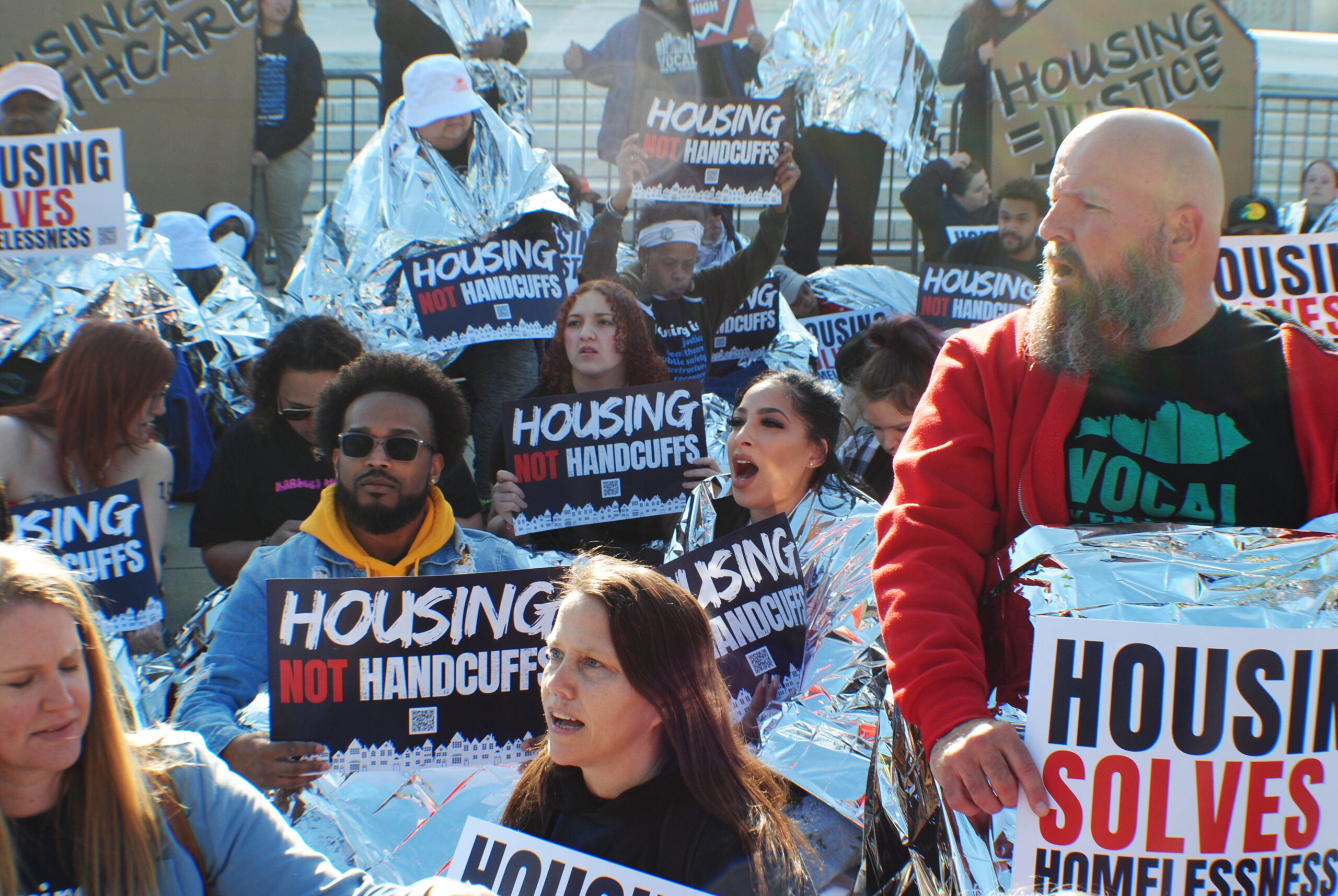
Trump signs two executive orders aimed at “Ending Crime and Disorder on America’s Streets” that will actually make our cities more dangerous for residents who are poor.
WASHINGTON, D.C. – July 24, 2025 – Today, the Trump administration issued two executive orders that fundamentally misrepresent homelessness as a criminal issue rather than a societal challenge requiring compassionate and systemic solutions. The National Coalition for the Homeless (NCH), dedicated to addressing the root causes of homelessness since the 1980s, strongly condemns these directives as ineffective, wasteful, and a grave violation of civil rights.
The first executive order threatens to withhold Housing and Urban Development (HUD) funding from states that protect individuals from involuntary commitment to institutional care. The second order, contradictory to the first, proposes allowing Medicaid funding for mental health treatment.
“Everyone deserves a safe place to live,” stated Donald Whitehead, Jr., NCH Executive Director. “These executive orders ignore decades of evidence-based housing and support services in practice. They represent a punitive approach that has consistently failed to resolve homelessness and instead exacerbates the challenges faced by vulnerable individuals.”
This administration has a concerning record of disregarding civil rights and due process, as evidenced by recent actions concerning immigrants. These executive orders direct Attorney General Pam Bondi to challenge existing judicial precedents and consent decrees in communities where the civil rights of people experiencing homelessness or mental health crises have been violated.
The assertion that the majority of individuals experiencing unsheltered homelessness are “addicted to drugs, have a mental health disorder, or both” is inaccurate. Furthermore, it disregards the reality that many individuals develop mental health or substance abuse issues after prolonged periods of homelessness due to the lack of safe and affordable housing.
As the executive order itself acknowledges, the Supreme Court has established due process protections that safeguard individuals from involuntary confinement in psychiatric hospitals. Historical attempts at mass institutionalization proved destructive to individuals’ lives and financially unsustainable for states. The original intent of deinstitutionalization in the 1970s was to accompany community re-integration with comprehensive housing and support services—a commitment that, tragically, remains underfunded and unfulfilled, both then and now.
The National Coalition for the Homeless reiterates that the definitive solution to homelessness is housing. Ensuring safe places to live and access to support services is not only a moral imperative but also the most effective strategy for building safer and more equitable communities.

[…] “These executive orders ignore decades of evidence-based housing and support services in practice. They represent a punitive approach that has consistently failed to resolve homelessness and instead exacerbates the challenges faced by vulnerable individuals,” said Donald Whitehead, executive director of the National Coalition for the Homeless, in a press release. […]
[…] “These executive orders ignore decades of evidence-based housing and support services in practice. They represent a punitive approach that has consistently failed to resolve homelessness and instead exacerbates the challenges faced by vulnerable individuals,” said Donald Whitehead, executive director of the National Coalition for the Homeless, in a press release. […]
[…] “states set laws and handle the process of involuntary commitments,” the Post said. The National Coalition for the Homeless warned it would “make our cities more dangerous for residents who are […]
[…] will steer resources to programs that address substance abuse, advocates for homeless individuals say that the order does not, in fact assist the homeless in America’s […]
[…] and uncertainty due to changes that strain resources targeted at combating homelessness. The Executive Order signed a week ago will have further disastrous affects for our neighbors forced to sleep outdoors. […]
[…] NCH’s statement on Executive Orders […]
[…] items for individuals with lived experience in communities impacted by the President’s Executive Order on homelessness. People experiencing homelessness in the District of Columbia have lost essential items such as […]