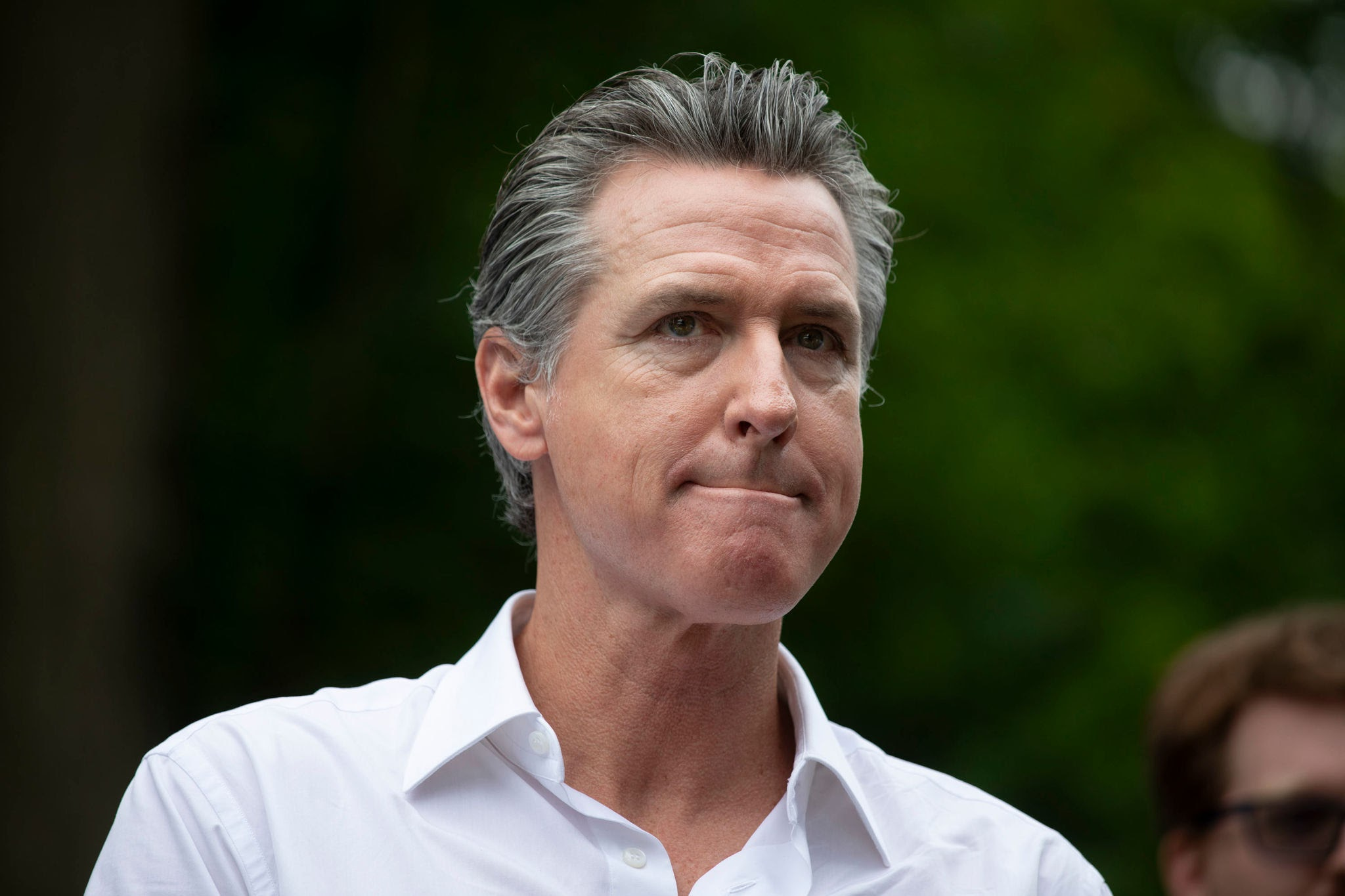
NCH Statement on California Governor Executive Order to Clear Encampments
Home
Last week, California Governor Gavin Newsom issued an Executive Order to forcibly remove people experiencing homelessness from state lands. This decision brings with it severe and predictable consequences, reflecting a grave injustice. The National Coalition for the Homeless is taking a stand against this inhumane action. We urge you to read our official statement to understand our position and the critical issues at stake.
NCH is profoundly disappointed and troubled by this decision. Addressing homelessness is a multifaceted challenge that demands both compassion and thoughtful care.
Donald H. Whitehead, Jr., Executive Director of the National Coalition for the Homeless, emphasizes:
“The way a society treats its most vulnerable reflects its core values, priorities, and dedication to social justice. Criminalizing homelessness comes with serious repercussions—leading to increased costs, more suffering, and potentially even loss of life. This decision undermines our collective responsibility and commitment to addressing this pressing issue with the compassion it demands.”
Criminalizing homelessness comes with serious repercussions—leading to increased costs, more suffering, and potentially even loss of life. This decision undermines our collective responsibility and commitment to addressing this pressing issue with the compassion it demands.
It is essential to approach the issue of homelessness with boundless empathy, compassion, and commitment to finding sustainable solutions that prioritize the dignity and rights of all individuals, which is crucial for survival.
Encampment raids and forced evictions are not viable solutions; they only exacerbate the dire circumstances of those experiencing homelessness, who have nowhere else to turn.
Resorting to raids is a short-sighted and expensive approach that only exacerbates homelessness and increases the number of individuals forced to live on California’s streets.
Instead, Governor Newsom should focus on long-term solutions that tackle the systemic causes of homelessness, such as the shortage of affordable housing, unemployment, mental health challenges, structural racism, and substance abuse.
Providing adequate shelter, supportive services, and resources will better support people experiencing homelessness in transitioning to stable housing and improving their overall well-being.
NCH and its partners with lived experience are profoundly disheartened by this decision. However, this moment in history will not go unnoticed. While deeply saddened, the advocacy movement views this action as a powerful catalyst for change.
A Call to Unity in Johnson v. Grants Pass
In the face of ongoing challenges, the resilience of our community—particularly those with lived experience of homelessness—continues to inspire and drive change. One such pivotal moment of change is upon us, as the Supreme Court prepares to hear a case that could significantly impact the rights of homeless individuals across the nation: Johnson v. Grants Pass.
This landmark case centers on the rights of homeless individuals in Grants Pass, Oregon, challenging ordinances that penalize life-sustaining activities in public spaces. At its heart, Johnson v. Grants Pass isn’t just about one town; it’s a reflection of the broader struggle for dignity, respect, and the right to exist in public spaces without fear of harassment or punishment.
The Issue at Hand
For too long, our brothers and sisters without homes have faced legal and societal barriers that criminalize their existence. Sleeping, eating, and performing other necessary life activities in public spaces—their last resort—are met with penalties rather than support. Johnson v. Grants Pass brings these injustices to the forefront, challenging us all to reconsider how we treat the most vulnerable among us.
Your Voice is Your Power
This case is a rallying cry for all who believe in justice and human rights. It’s a reminder that together, we can challenge the status quo and advocate for policies that uplift rather than oppress. Your voice is critical in this fight.
Call to Action
Your involvement signifies more than just your support; it embodies hope, unity, and the unwavering belief that change is possible. Let’s stand together for justice, for dignity, and for the rights of all individuals to live freely and without fear.
Here’s how you can stand in solidarity:
Sign the Petition: Add your name to the growing list of individuals calling for an end to the criminalization of homelessness. Each signature sends a strong message to policymakers about the public’s demand for compassionate and humane treatment of all individuals, regardless of their housing status.
Join us for the Housing Not Handcuffs Rally on April 22, 2024, at the Supreme Court: Mark your calendars and make your presence felt. This rally isn’t just about making noise; it’s about showing the strength of our community and the depth of our commitment to change.
Join with communities across the country in holding coordinated actions on April 22nd! Click here to let us know about your local event, or to learn more about what might be happening in your community. Check out our Organizing Skill Share guide for action inspiration and guidance.
We know that laws are passed and enforced locally. Your City Council, Mayor, and police are the ones implementing anti-homeless policies (such as sweeps) now. So, local actions are really important, in addition to actions in front of the U.S. Supreme Court.
A small group of people can have a BIG impact! Together, we can demonstrate the collective power of individuals united for a common cause.
The Journey Ahead
The path to justice is long and fraught with challenges, but it’s a journey worth taking. Johnson v. Grants Pass is more than a legal battle; it’s a moral one. It’s about affirming the right of every individual to live with dignity and without fear. As we stand on the brink of this historic moment, let’s come together to support those who have been marginalized and to show that humanity and compassion can prevail over indifference and injustice.
Together, We Can Make a Difference
To learn more about Johnson v. Grants Pass and stay informed on the latest developments, here are several avenues you can explore:
Supreme Court’s Official Website: The United States Supreme Court’s official website offers access to court documents, including briefs, oral arguments, and opinions related to the case. This is a primary source for accurate and up-to-date information.
Congressional leaders have unveiled the FY24 THUD spending bill, earmarking significant funding for the Department of Housing and Urban Development (HUD) programs focused on affordable housing and homelessness. The bill allocates $70 billion to HUD, marking an $8.3 billion increase from the FY23 levels. This funding boost is seen as a major achievement for the National Low Income Housing Coalition (NLIHC)’s national HoUSed campaign, advocates nationwide, and congressional supporters such as Senators Brian Schatz and Cindy Hyde-Smith, along with Representatives Tom Cole and Mike Quigley.
– The Housing Choice Voucher (HCV) program receives a substantial increase, funded at $32.4 billion, allowing for the renewal of all existing rental assistance contracts and expanding assistance to 3,000 additional households.
– Homeless Assistance Grants see a $418 million increase, totaling $4.05 billion.
– The Public Housing Capital and Operating Funds receive modest increases, with the Capital Fund at $3.41 billion and the Operating Fund at $5.5 billion.
– The Native American Housing Block Grant is boosted by $324 million, reaching $1.1 billion.
– Despite some programs facing cuts, such as the HOME Investment Partnerships Program and the Choice Neighborhoods, significant resources are allocated across various housing and homelessness initiatives.
Analysis of Specific Programs:
– Tenant-Based Rental Assistance is set at $32.4 billion, aiming to renew all existing contracts and expand support.
– Public Housing funding includes slight increases for capital and operating funds, with a total of $3.4 billion for the capital account.
– The bill also emphasizes homelessness programs, allocating $4.05 billion for Homeless Assistance Grants, indicating a focused effort to address the homelessness crisis.
Overall Impact:
The FY24 spending bill represents a significant step towards addressing affordable housing and homelessness challenges in the U.S. While it marks progress, NLIHC and its allies continue to advocate for sustained and comprehensive investment in housing assistance to meet the growing needs of Americans facing housing insecurity.
We are deeply concerned about the recent findings presented in the Department of Housing and Urban Development’s (HUD) Annual Homeless Assessment Report (AHAR). The report reveals a disturbing 12% overall increase in the number of individuals experiencing homelessness across the nation from 2022 to 2023. This data highlights the pressing need for immediate action to ensure the protection of the human right to housing.
According to AHAR report findings, the number of people experiencing homelessness is the highest since the reporting began in 2007, painting a bleak picture of the current housing crisis. These stark developments are a somber reminder of the inaction and lack of prioritization when it comes to addressing the root causes of homelessness in our country.
We firmly believe that housing is a fundamental human right and cannot overlook the fact that these findings reflect an urgent need for more comprehensive and proactive measures to combat the growing crisis of homelessness in our communities.
As the AHAR report underlines the gravity of the situation, we at NCH urge all stakeholders including government agencies, policymakers, and community leaders to collaborate and redouble their efforts to proactively address homelessness. We call for the immediate allocation of resources and the implementation of long-term solutions that prioritize access to safe and affordable housing for all.
To underscore the need for swift access to housing, communities across the country will commemorate Homeless Persons’ Memorial Day this week (December 21), remembering thousands of neighbors, family members and friends who have passed away prematurely due to lack of permanent and safe housing.
Today, join the National Coalition for the Homeless, the National Health Care for the Homeless Council, and the National Consumer Advisory Board to remember the lives of those we have lost this year and continue our fight to end homelessness. NHCHC CEO Bobby Watts and NCH Executive Director Donald Whitehead will speak, along with Reverend Dr. Elizabeth Theoharis from the Poor People’s Campaign; Warren Magee, NCAB Steering Committee member and Chair of the Consumer Advisory Board at Boston Health Care for the Homeless; Dr. Catherine Crosland, Director of Homeless Outreach Development at Unity Health Care in Washington, D.C.; and Madalyn Karban, Bhavana Akula, and Ishaan Akula from NCH’s National Youth Division, Bring America Home NOW.The program will also feature art by artist and advocate Tammy De Grouchy Grubbs and an original spoken word performance from Charlotte A. Garner, Regional Representative, NCAB Board Steering Committee, Chair of the Ellen Dailey Advocacy Committee, and Chair of the Healthcare for the Homeless Houston Change Committee. If your community is hosting a memorial, please register your event here.
On this day, we come together as a community to mourn and remember those we have lost due to homelessness. It is a solemn occasion that reminds us of the dire consequences posed by the lack of stable, secure housing for our most vulnerable neighbors.
Together, let us reaffirm our commitment to upholding the right to housing and work towards a future where homelessness is eradicated, and every individual has a place to call home.
The National Coalition For The Homeless is releasing a vital informative report called Design Against Humanity, highlighting the many ways that Hostile Architecture is used to prevent full use of public space, especially by certain members of our communities.
We have witnessed many examples of hostile architecture in the five cities visited so far on the Local Power Tour – Los Angeles, Sacramento, Seattle, Miami and Atlanta. Most all the cities placed boulders throughout underpasses or in front of city buildings, have benches with bars in the middle, and/or use eco blocks to prevent RVs from stopping and parking.
Seattle had the most aggressive usage of some of these methods. There were eco blocks in industrial areas installed by the local businesses to ensure no RVs or cars could park near or in front of their businesses. There were fenced off areas surrounding underpasses and anywhere people could possibly stop and rest.
Los Angeles uses loud music in their metro stations and, after a recent sweep in Hollywood, planters of various sizes were installed to avoid the return of long term residents, their tents and belongings.
Miami has double fencing surrounding their underpasses to prevent people from seeking shelter from the extreme heat and rainstorms. Atlanta has employed similar tactics installing boulders under the highways as well.
The use of these forms of hostile architecture often result in forcing the unhoused to go into hiding and relocate, often far away from any social services. It all reads like a slow migration to push the unhoused farther and farther out of site and further from permanent housing. But many of these efforts also make public spaces unwelcome to people who have disabilities, families, and older persons.
Many people are not aware of, or do not notice, hostile architecture. Once we understand the examples, we start to see just how much our cities have made public space unwelcoming. This report will help educate and aid our communities and elected officials in understanding the struggles of the people displaced around their cities, where the architecture is often designed to work against them.
Written by Mary Cellini, who leads an NCH Field Office from her organization Housing is Human Right, a project of the Aids Health Foundation.
LOS ANGELES – April 22, 2026 – The documentary HOMELESS, directed by award-winning director Valerio Zanoli and released in collaboration with the National Coalition for the Homeless, will be available on Amazon, Hoopla, and Plex with additional platforms to follow on April 24, making the powerful and timely film accessible to audiences worldwide.
More than a documentary, HOMELESS is a call to action. The film humanizes people experiencing homelessness by giving them a platform to share their stories, dreams, and struggles, while challenging long-held stereotypes and reframing homelessness as a humanitarian emergency that demands compassion, urgency, and collective solutions.
Filmed in Las Vegas – where the stark contrast between luxury and extreme housing insecurity is impossible to ignore – HOMELESS explores the root causes and devastating impact of homelessness through deeply personal storytelling and expert insight. While the city serves as a focal point, the film underscores that homelessness is a global crisis, affecting more than 100 million people worldwide and over 700,000 individuals in the United States on any given night.
The documentary has received widespread praise from homelessness organizations, journalists, and global institutions. HOMELESS premiered at the World Urban Forum, convened by the United Nations Human Settlements Programme (UN-Habitat), and has since been described as “impactful, emotional, human” by the National Coalition for the Homeless and “a very powerful documentary” by the United Nations Human Settlements Programme.
The film features interviews with leaders and advocates from organizations including the National Coalition for the Homeless, Nevada Homeless Alliance, Nevada Housing Coalition, and the ACLU of Nevada. UN-Habitat has embraced HOMELESS as a tool to support its World Urban Campaign and #HousingMatters initiative, amplifying the urgent need for safe and affordable housing for all.
“This film makes it clear that homelessness is not an individual shortcoming, but the result of broken systems and failed policies,” said Donald Whitehead, Executive Director of the National Coalition for the Homeless. “HOMELESS calls on all of us to recognize our shared responsibility and to act with urgency and humanity.”
Adding to the film’s emotional resonance is the original song “One World One Home,” performed by world-renowned singer Bonnie Tyler in collaboration with the Dallas Street Choir. The song, written by Zanoli, is featured in the documentary’s soundtrack and reflects the film’s core message of unity, dignity, and shared humanity.
Over the past two decades, Zanoli has built a career at the intersection of cinema and social impact, creating films that raise awareness and funds for critical causes. HOMELESS is part of his ongoing initiative, Let’s Make a Difference, and all profits from the documentary’s distribution and original music will be used to help secure affordable housing for underprivileged families.
“Too often, homelessness is discussed in numbers or headlines, not in human terms,” said Valerio Zanoli, director of HOMELESS. “This film is about restoring dignity and visibility to people who are too often ignored. If we allow ourselves to truly see one another, change becomes possible.”
HOMELESS, which is distributed by Buffalo 8, will be available to stream on Amazon, Hoopla, and Plex with additional platforms to follow beginning April 24, inviting viewers around the world to bear witness, start conversations, and become part of the solution.
Watch the official trailer now:
About Valerio Zanoli
Valerio Zanoli is a film director and producer whose work bridges cinema and social impact, using storytelling to raise awareness and support for critical humanitarian causes. A graduate of the USC School of Cinematic Arts, Zanoli has directed and produced multiple internationally distributed films, including THE MINIS, NOT TO FORGET, HOPEFUL NOTES, and ALL YOU CAN DREAM. His recent documentary HOMELESS explores the lived experiences of unhoused individuals and has been presented at the Massachusetts Institute of Technology (MIT) and at the World Urban Forum convened by the United Nations Human Settlements Programme. Beyond filmmaking, Zanoli leads housing-focused initiatives such as Helping Vegas, collaborating with nonprofits and community organizations to address the affordable housing crisis. His work has been recognized by state leaders and national organizations for its commitment to social responsibility and community impact.
The National Coalition for the Homeless (NCH) is a nationwide network of individuals with lived experience of homelessness, advocates, activists, service providers, and community partners united by a shared mission: to end and prevent homelessness while ensuring the immediate needs and civil rights of those experiencing homelessness are respected and protected. NCH envisions a world where everyone has access to safe, decent, accessible, and affordable housing. Guided by principles of dignity, equity, and justice, the organization works to address the systemic and structural causes of homelessness, combat discrimination and criminalization, and elevate the leadership of those most impacted. Through collaboration, advocacy, and accountability, NCH advances solutions that uphold housing and basic human needs as fundamental rights.
Buffalo 8 Distribution makes film distribution transparent and accessible by helping filmmakers reach global audiences through innovative marketing strategies and our direct output deals with streaming platforms, networks, and international partners. Based in Santa Monica, Buffalo 8 is a full-service film and media company focused on production, post-production, finance, and distribution. At Buffalo 8, we are an entrepreneurial culture fused with a love of storytelling, the creative arts, and a passion for delivering original stories.
The National Coalition for the Homeless stands in firm opposition to the Trump Administration’s FY27 budget proposal. A 44% cut to HUD is not just a policy decision—it is a moral failure. The President’s proposed cuts represent one of the most dangerous threats to housing stability in modern history, placing millions of our neighbors at risk of losing the very foundation of their lives, their homes.
We must be clear about what this means. Nearly $27 billion would be stripped from life-saving programs like Housing Choice Vouchers, Public Housing, and Emergency Housing Vouchers. These are not abstract federal programs; they are the difference between stability and survival for over 4.4 million households. As is so often the case, these cuts will fall hardest on communities of color—individuals, families, and neighborhoods that have already endured generations of systemic inequity and discrimination.
We know what works. We know that housing with strong supportive services works. Permanent Supportive Housing works. Targeted, well-funded interventions work. What does not work is pulling the rug out from under people and then blaming them for falling. Proposals such as those in President Trump’s cruel budget to impose time limits on assistance ignore the reality that poverty is not a timed condition; it is a systemic one. Another approach that does not work is arresting and imprisoning people for having nowhere to sleep—an approach embraced by this administration.
These policies don’t solve homelessness; they deepen it.
This budget doesn’t just cut funding, it dismantles systems of care. It threatens programs that support people living with HIV/AIDS, weakens Permanent Supportive Housing, and reinforces the dangerous narrative that people experiencing homelessness are the problem, rather than the systems that have failed them.
At NCH, we reject that narrative. We reject the idea that people should be punished for being poor. And we reject any policy that continues the cycle of criminalization instead of investing in real solutions.
We are calling on Congress to do what is right, reject these harmful cuts, and instead invest in a future where housing is treated as the fundamental human right that it is. Ending homelessness cannot be achieved by slashing programs, but only by choosing people first. Ending homelessness is about addressing the root causes of inequality and making the level of investment that meets the scale of the crisis.
We cannot manage our way out of homelessness with fewer resources. We must methodically and compassionately build our way out with courage, compassion, and a commitment to justice.
WASHINGTON, D.C. — The National Coalition for the Homeless (NCH) today announced the release of its latest research report, “Homelessness and Racial Equity in the United States: Assessing Post-2018 Progress.” The report provides a comprehensive look at how 31 major U.S. communities have worked to dismantle racial disparities in homelessness since 2018, highlighting critical progress while warning of new risks to federal equity initiatives.
Since 2018, when the U.S. Department of Housing and Urban Development (HUD) elevated racial equity as a federal priority, communities nationwide have faced increased pressure to address the fact that people of color—particularly Black and Native American individuals—remain disproportionately represented among the homeless population.
“This report is about preserving institutional memory and documenting the concrete steps communities are taking to move toward more equitable outcomes,” said Donald Whitehead, Executive Director of NCH. “In a climate of shifting federal policy, it is essential to show that racial equity work is not a political ideology; it is an evidence-based response to documented disparities.”
Key Findings of the Report:
The NCH research team identified several major themes in the progress made by cities and Continuums of Care (CoCs) across the country:
Data-Driven Action: The majority of surveyed communities have moved toward disaggregating homelessness data by race and ethnicity, with many launching real-time dashboards to track equity goals.
Systemic Reform: Communities are increasingly abandoning tools like the VI-SPDAT, which may perpetuate racial bias, in favor of redesigned Coordinated Entry systems that account for racialized risk.
Institutionalizing Equity: The creation of dedicated Racial Equity Committees and multi-system collaborations (including health, criminal justice, and education) has become a standard for guiding long-term strategy.
Targeted Funding: Leading jurisdictions are now incorporating equity criteria into their funding competitions and intentionally investing in culturally specific, Black-led organizations.
Urgent Recommendations:
Despite these strides, the report emphasizes that much work remains. The NCH outlines several calls to action for local leaders and policymakers:
Broaden Data Scope: Include “doubled up” populations (those staying with others) to capture a more accurate picture of housing instability among Latino, youth, and LGBTQ+ communities.
Upstream Intervention: Partner with eviction prevention and healthcare systems to stop the pipeline into homelessness before it begins. Prevention programs are essential to a well-functioning homeless service system.
Sustainable Housing: Prioritize zoning reforms and community land trusts in neighborhoods historically impacted by displacement.
Protect Rights: Advocate for robust source-of-income discrimination protections and fair chance housing policies.
A Call to Local Leadership
With current federal-level rhetoric creating uncertainty for Diversity, Equity, and Inclusion (DEI) initiatives, the NCH report concludes that local leadership is more vital than ever. The document serves as a roadmap for Continuums of Care and municipal governments to maintain their commitment to marginalized communities regardless of the national political environment.
“We cannot effectively address homelessness without confronting the racial inequities that drive it,” the report concludes. “The momentum documented here represents real progress that must not be abandoned.”
For more information or to request a full copy of the report, please contact the National Coalition for the Homeless.
About the National Coalition for the Homeless (NCH):
The National Coalition for the Homeless is a national network of people who are currently experiencing or who have experienced homelessness, activists and advocates, community-based and faith-based service providers, and others committed to a single mission: to prevent and end homelessness while ensuring the immediate needs of those experiencing homelessness are met and their civil rights protected.
An initiative to turn vacant buildings into homes…
Across the country, buildings sit empty while people sleep without a safe place to call home. This disconnect is not a failure of resources, but of priorities.
The Adaptive Reuse Initiative activates a national effort to turn what already exists into what is urgently needed: safe, dignified housing paired with supportive services.
This initiative calls for the creation of 1,000,000 units of adaptive reuse housing over the next 10 years. By transforming vacant and underused buildings, communities can move faster, lower costs, and deliver real housing solutions to people who cannot afford to wait.
Communities nationwide are invited to stand in support of this initiative and advance adaptive reuse as a housing-first solution rooted in dignity, efficiency, and care.
March 18th – Join us for Lobby Advocacy Day in support of the State Adaptive Reuse and Sweat Equity Housing Act. Together, we will urge state representatives to recognize adaptive reuse as a vital housing solution and a critical step toward our shared mission of ending homelessness.
March 4th – Lobby Advocacy Day Orientation. To prepare for the big day, we hosted a virtual orientation. Watch Now
Adaptive reuse reimagines existing buildings for new purposes while preserving their structure and character. It is about possibility, not demolition.
A vacant hotel becomes permanent supportive housing. An old warehouse becomes apartments. A former school or office building becomes a community space. In the fight to end homelessness, adaptive reuse is powerful because it creates housing faster and at lower cost than new construction, while strengthening communities rather than displacing them.
Reimagining a Proven Housing Model for Today’s Vacant Buildings
A recent study conducted by the Pew Research Center titled“How States and Cities Decimated Americans’ Lowest-Cost Housing Option”revealed that Single-Room Occupancies (SROs), once the backbone of affordable housing in major U.S. cities, were systematically diminished through zoning changes and restrictive building codes beginning in the mid-20th century. What had been one of the nation’s most accessible housing options for the poorest residents, newcomers, and working-class families effectively disappeared from the housing landscape.
Historically, SROs provided modest micro-unit residences with shared facilities at rents far below standard apartments, serving as a critical safety net in urban centers like New York City, Chicago, and San Francisco. In some cities, they once accounted for nearly 10 percent of rental housing. Over time, policy shifts and public opposition halted new SRO construction and led to the demolition or conversion of thousands of units into higher-cost uses.
The Pew study found that if SRO housing had expanded at rates comparable to other housing types since 1960, the United States would have about 2.5 million more affordable units today, enough to shelter many of the unhoused population several times over.
The Adaptive Reuse Initiative seeks to restore and modernize this proven housing model by transforming vacant hotels, office buildings, and underutilized properties into safe, low-cost micro-units with supportive services. By breathing new life into unused spaces, we can address the housing shortage at its root and reinstate a dignified, scalable solution that once grounded communities across America.
The report, “How A New Model of Office to Co-living Conversions Can Reduce Homelessness With Low-Cost Housing,” builds on this research by analyzing the relationship between housing supply, rent growth, and homelessness, and explores how office-to-co-living conversions can help restore low-cost housing options similar to SROs. Download the study to learn how adaptive reuse can transform vacant buildings into affordable homes and help reduce homelessness.
Median rent growth is low in jurisdictions that added proportionally more households than the U.S. overall from 2017–2021, such as Minneapolis, MN, and New Rochelle, NY.
The housing shortage disproportionately hurts low- and moderate-income households, with the lowest income quartile experiencing a 61.9% average rent change from September 2017 to September 2024, compared to 43.9% for the highest quartile.
Increases in supply have driven down rents, particularly in lower-cost apartments (Class C) in markets like Austin, Dallas, and Phoenix in 2023.
Homelessness is high where rents are high (e.g., San Francisco, New York City) and increased in areas where rents soared between 2017 and 2022. For example, Phoenix had a 144% rent growth and a 104% homelessness rate growth. Conversely, after zoning reform, Minneapolis saw a -12% change in homelessness from 2017-2022.
Office-to-co-living conversions are a model for reviving low-cost housing, similar to the historical Single-Room Occupancies (SROs).
This approach is more cost-effective than new builds or office-to-conventional apartment conversions. Construction costs are 25-35% lower per square foot than office-to-conventional apartments.
The cost per co-living unit is 2x-4x lower than a new build or office-to-conventional apartment. For instance, a co-living conversion cost in Los Angeles is estimated at $134,000, compared to $400,000 for a new-build studio.
Co-living units, typically around 150 square feet, centralize plumbing to reduce costs by avoiding kitchens and bathrooms in each unit.
In Denver, a co-living conversion requires only a $23,300 subsidy per unit, significantly less than the $300,000 subsidy required for a newly built studio.
With the same $10 million in subsidies, co-living conversions in Chicago could create 125 homes, compared to 35 for studios.
40% of U.S. renter households and 86% of homeless households consist of only one person, making the micro-unit design relevant.
Endorse the Campaign
By signing on, your organization takes a stand for what is possible. You commit to helping create 1,000,000 units of adaptive reuse housing by 2032 and to advancing solutions that meet people where they are, with dignity and urgency.
The Bring America Home NOW campaign will support partners with toolkits, resources, and clear messaging to help raise awareness, mobilize communities, and drive meaningful change on the ground.
Now is the time to act. Whether you are a housing provider, advocate, architect, community leader, or concerned organization, your voice and leadership matter. There is a role for you in this movement.
Join us in advancing real solutions, honoring lived experience, and meeting this crisis with the urgency it deserves. Together, we can secure Housing NOW.
Will you stand with us? Endorse the Adaptive Reuse Initiative to turn vacant buildings into homes and support the creation of 1,000,000 adaptive reuse housing units over the next 10 years.
Housing NOW! is a national campaign advancing bold, practical solutions to end homelessness. We believe housing is a human right and that no one should be punished for surviving without it.
Across the country, homelessness is rising while vacant and underused buildings sit empty. Instead of investing in criminalization, we are pushing for housing-first strategies that move people indoors quickly, affordably, and with dignity.
A key pillar of this campaign is the Housing NOW! is a national campaign advancing bold, practical solutions to end homelessness. We believe housing is a human right and that no one should be punished for surviving without it.
Homelessness is not inevitable. It is the result of policy choices. Housing NOW! calls on leaders, advocates, and communities to choose solutions that prioritize people, stability, and care.
Join us and help us demand Housing NOW!
Housing NOW! Adaptive Reuse Initiative | March 18th
We are calling for the creation of 1,000,000 units of adaptive reuse housing over the next 10 years. By transforming vacant and underused buildings, we can move faster, lower costs, and deliver real housing solutions to people who cannot afford to wait. As part of this effort, we invite advocates and partners to join us for National Lobby Advocacy Day on March 18, where we will urge state leaders to recognize adaptive reuse as a vital housing solution and a critical step toward ending homelessness.
Housing NOW! National Day of Action Rally | April 20, 2025
On April 22, 2025, thousands of advocates rallied nationwide, including at the Capitol in Washington, DC, to demand Housing NOW! The nationwide rally was in response to the Supreme Court’s harsh ruling that allows cities to ticket and arrest people for sleeping outside when they have nowhere else to go. Advocates across the country mobilized to oppose the criminalization of homelessness and to demand real solutions rooted in housing, dignity, and justice
Download essential tools to support your efforts in creating change.
10 Point Plan highlights key strategies local communities can adopt, expanding affordable housing, investing in prevention, creating employment opportunities, increasing access to treatment, and building supportive infrastructure.
At the dawn of Black History Month, we are confronting a dangerous reality: hard-won rights secured during the Civil Rights Movement are being systematically eroded in plain sight.
The attack on voting rights has intensified across the country—through voter suppression laws, gerrymandering, purges of voter rolls, and efforts to criminalize civic participation. These assaults are not accidental. They are deliberate strategies designed to silence Black voters and communities of color whose political power has grown over the last generation.
At the same time, the targeting of immigrants—particularly asylum seekers—has escalated with alarming speed. Elected officials, journalists, judges, and advocates of color are increasingly subjected to harassment, intimidation, and threats simply for doing their jobs or speaking the truth. These attacks are meant to send a message: visibility will be punished, dissent will be crushed, and justice will be delayed through fear.
The rollback of diversity, equity, and inclusion initiatives alongside the dismantling of affirmative action represents another front in this coordinated effort. Under the guise of “neutrality” and “fairness,” policies designed to address centuries of exclusion are being stripped away. The result is not fair, it is a return to structural inequality, reinforced by fear and silence.
History teaches us that progress is never permanent.
Every right we celebrate this month—voting access, fair housing protections, equal employment opportunity, the right to protest—was won through sustained resistance, not passive remembrance. Those victories were not gifted by benevolence; they were demanded by people who refused to accept injustice as inevitable.
We cannot afford complacency.
Now is not the time for silence. Now is not the time for timidity. Now is not the time to confuse civility with justice.
The forces seeking to roll back civil rights are counting on exhaustion, fragmentation, and fear. They are betting that we will grow tired, retreat inward, or convince ourselves that someone else will carry the burden of resistance.
But Black History Month reminds us of a different legacy.
It reminds us that ordinary people, students, faith leaders, workers, mothers, and elders changed the course of this nation by refusing to stand down. They organized it when it was dangerous. They spoke when it was costly. They marched when the law told them not to.
In Minnesota, communities have shown remarkable determination in standing up to the harsh tactics of ICE, refusing to allow fear and intimidation to undermine their resolve. Local organizers, faith groups, and neighbors have mobilized in support of immigrants facing detention and deportation, demonstrating solidarity through legal aid, rapid response networks, and public advocacy. Their commitment sends a powerful message: the pursuit of justice will not be halted by threats or raids, and Minnesotans will continue to defend the rights and dignity of every resident, regardless of immigration status.
The work before us is not new, but it is urgent.
Defending voting rights. Protecting immigrants and asylum seekers. Advancing racial and economic justice. Resisting the criminalization of poverty and protest.
These struggles are inseparable, and they demand our full participation.
Black History Month is not a pause for reflection alone—it is a recommitment. A reminder that justice is not self-executing and freedom is not self-sustaining.
The fight continues because it must. And history is watching what we do next.
Written by Donald Whitehead, Executive Director of the National Coalition for the Homeless
Held annually the week before Thanksgiving, Hunger and Homelessness Awareness Week is an opportunity for our communities to come together to contribute, advocate, reach out and educate, but most of all, take action to end homelessness.
Held annually on the winter solstice and longest night of the year, National Homeless Persons’ Memorial day is an opportunity to remember those we have lost too early due to the violence and effects of homelessness. Communities take part with solemn services and stern advocacy for an end to homelessness.
The National Coalition for the Homeless is thrilled to announce that the 2026 National Lived Experience Leadership Conference will be held once again in San Jose, CA, in partnership with Destination: Home, September 2026.
This tradition is rooted in remembrance and in the commitment to lasting change.
On December 18th, we invite you to join us from wherever you are for a livestream of this year’s Homeless Persons’ Memorial Day ceremony. This annual day of remembrance brings communities together to honor the lives of people who died while experiencing homelessness over the past year. Register here to attend the virtual ceremony.
Memorial Event Livestream Date: Thursday, December 18th, 2025 Time: 11 a.m. PST / 12 p.m. MST / 1 p.m. CST / 2 p.m. EST
A full list of speakers for the event will be shared during the livestream.
The National Coalition for the Homeless, the National Health Care for the Homeless Council, and the National Consumer Advisory Board encourage communities across the country to mark Homeless Persons’ Memorial Day on or around the winter solstice, the first day of winter and the longest night of the year. This tradition is rooted in remembrance and in the commitment to lasting change. As night stretches across the nation, we pause to honor neighbors, friends, and loved ones who lost their lives without the basic security of a home.
Each year, this ceremony serves as a moment to acknowledge the injustice of lives cut short, to reaffirm our shared responsibility to protect the dignity of every person, and to renew our dedication to a future where housing is guaranteed to all. Communities across the country join in this observance to make clear that no one should die for lack of housing. You can learn more about the significance of this day through our HPMD Advocacy Agenda.
If you would like to host a local event, there are many ways communities take part, including candlelight gatherings, readings of names, spiritual services, marches, and public education efforts. Resources for planning an event, last year’s national livestream, and information on local activities and mortality data are available here.
If you wish to honor someone who has died while experiencing homelessness in your community, you may submit their name for inclusion in our “in memoriam” video during the livestream ceremony. You can share a name by clicking here.
As the longest night of the year approaches, we hope you will join us in remembrance and reflection. Together, we carry forward the work of ensuring that no life is lived or lost without the dignity of a safe and stable home.